REVIEW · CHANIA
Cheese and Wine Tasting Tour From Chania
Book on Viator →Operated by TravelPath AllcreteTours · Bookable on Viator
Old olive tree, big flavor day. This Cheese and Wine Tasting Tour from Chania links Vouves and its ancient olive wonder with Cretan food-making stops, finishing at Pnevmatikakis Winery in Kissamos for a proper tasting day.
I like that the day isn’t only about eating. You get hands-on production context at places tied to bread, honey, olive oil, and cheese, so each bite comes with a reason. I also like the winery time—at Pnevmatikakis, you taste multiple locally made wines paired with local delicacies, and it feels easy to sample without rushing.
One thing to plan around: the day starts early (8:00 am) and you’ll spend hours traveling between stops. Also, bring cash for the bakery, because it can limit what you can buy.
In This Review
- Key things to know before you go
- Why this Chania cheese and wine day works
- Price and value: what $42.06 buys you
- The 7-hour route, stop by stop (and why the timing matters)
- Vouves and the ancient olive tree you can actually see
- Perivolakia food paths: bakery, honey learning, and production reality
- Pnevmatikakis Winery in Kissamos: family-run wine tasting done right
- What you’ll taste (and what to expect at each stage)
- Cash vs cards: the one wallet rule
- The guide makes the day: pacing, questions, and real talk
- Who should book this tour (and who might want something else)
- Weather and comfort: a practical heads-up
- Should you book the Cheese and Wine Tasting Tour From Chania?
- FAQ
- How long is the Cheese and Wine Tasting Tour from Chania?
- What is the price per person?
- What time does the tour start, and where do I meet?
- Is the tour offered in English?
- Is admission included for all stops?
- What wine and food is included at the winery?
- Do I need cash during the tour?
- What happens if weather is bad?
Key things to know before you go
- Vouves’ ancient olive tree stop: a natural monument with an estimated age between 3,000 and 5,000 years.
- Perivolakia food stops in Cretan style: bread and savouries, olive grove time, and learning about honey-making.
- Family-run Pnevmatikakis Winery: wine history from a working winery, plus local food pairings.
- Wine tasting volume: you may get up to 18 self-service wine tastings during the winery visit.
- Easy, small-day pacing: the tour is long enough to be worth it, but broken into focused stops rather than one nonstop meal run.
- Plan for cash: cards may work at most places, but the bakery is the one spot to watch.
Why this Chania cheese and wine day works
Chania has plenty of tours that promise food and wine. This one works because it connects the dots between Cretan ingredients and how people actually make them. You’re not just tasting. You’re seeing the setup—olive culture, bread-making, honey production ideas, and then wine at a family winery.
The day also has a nice mix of sights and tastes. First you hit Vouves, home to the oldest recorded olive tree in the world (or at least the oldest that’s been officially recorded), then you shift to food production in Perivolakia, and finally you land in Kissamos for wine. It’s a practical route that makes sense geographically too, even with the travel time.
Price and value: what $42.06 buys you
At about $42.06 per person for roughly 7 hours, this tour isn’t aimed at luxury. It’s aimed at value: a full day of tastings plus guided context.
What you’re paying for:
- Guided time spread across three core stops.
- Free admissions at the first two stops (Vouves and Perivolakia).
- Winery tasting included at Pnevmatikakis Winery, along with local delicacies.
- Time to sample the products you came for: cheese (via cheese-related production time), honey, bread/savouries, olive oil, and wine.
Is it a bargain? In the best sense, yes. You’d pay plenty more if you tried to assemble the olive-tree stop, a local bakery visit, and a winery tasting on your own. The main cost “gotcha” isn’t the ticket price—it’s what you choose to buy on top of what’s included.
The 7-hour route, stop by stop (and why the timing matters)
This is designed as a day trip, not a quick snack tour. Start is 8:00 am, and you’ll typically be moving between places for much of the day. The stop durations are clear, and they shape the feel of the experience:
- Stop 1: Vouves (about 30 minutes)
Short visit, big payoff. You’re there to see the ancient olive tree and get the story behind it.
- Stop 2: Perivolakia (about 1 hour 45 minutes)
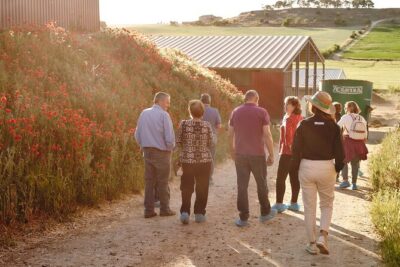
This is your slow-food stretch: bakery goods, olive grove learning, honey-related info, and related tastings around local production.
- Stop 3: Pnevmatikakis Winery (about 1 hour)
The tasting slot. Enough time to taste several wines and pair them with local foods without feeling stuck all afternoon.
The remaining hours are travel. That’s normal in Crete around Chania when you’re bouncing between areas. If you’re the type who hates bus time, keep your expectations realistic. If you can handle it, you’ll feel like you’ve gotten a complete Cretan flavor day.
Vouves and the ancient olive tree you can actually see
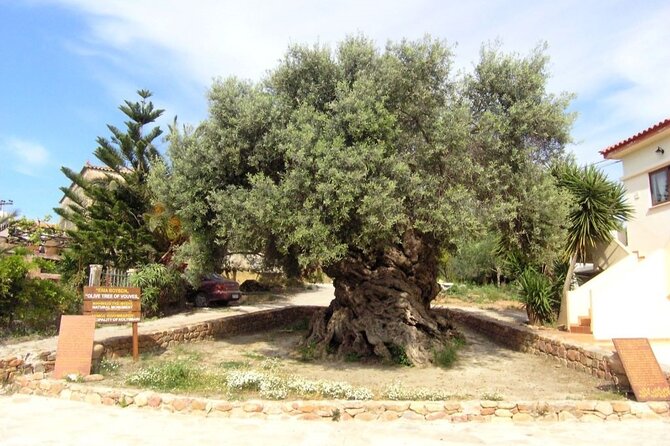
Vouves is the kind of stop that makes your brain say, Wait, really? In Ano Vouves, you can admire the oldest recorded olive tree in the world—a living natural monument.
Here’s what makes this more than a photo stop:
- The tree’s age is estimated between 3,000 and 5,000 years, and it’s still alive and fructifying.
- The tree is described as having a wild olive base that became domesticated by humans, with mention of the Tsounati variety.
- The trunk has been shaped by time into something you can read like sculpture, with a listed circumference of 12.5 meters and a diameter of 4.6 meters.
You’ll have about 30 minutes here, which is just enough to look closely, take photos, and absorb the story. Don’t plan to “linger.” If you want lingering time, you’ll need to schedule extra hours before or after the tour.
Perivolakia food paths: bakery, honey learning, and production reality
Perivolakia is where the tour earns its name. This is where you start connecting Cretan eating with how ingredients are made.
What’s on the menu at this stage:
- A visit to a local bakery, focused on traditional Cretan savouries and bread-type items (think rusks and bread).
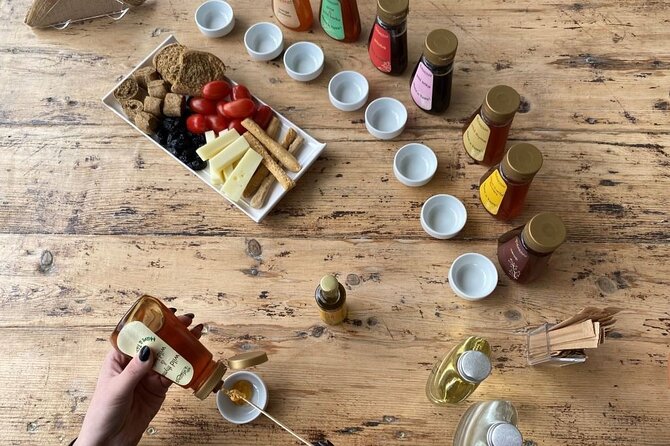
- A visit to an olive grove, where you learn about olive trees and how Cretan honey is made.
In practice, the experience often includes more than just the listed basics. The tasting day typically brings in related production stops like cheese time, olive oil time, and even a look connected to beekeeping. It’s all still within the same long Perivolakia segment, so you’re not scattered across too many locations.
The biggest practical tip here is about purchasing. The tour day can include time to buy or add items at the bakery. Bring cash—this is the one place where paying by card may not work smoothly, and that can limit what you can take home.
Pnevmatikakis Winery in Kissamos: family-run wine tasting done right
The final stop is at Pnevmatikakis Winery in Kissamos. This is a family-run operation, and that matters because it changes the feel from corporate wine marketing to local craft storytelling.
At the winery, you’ll:
- Learn about the wine-making tradition of Crete.
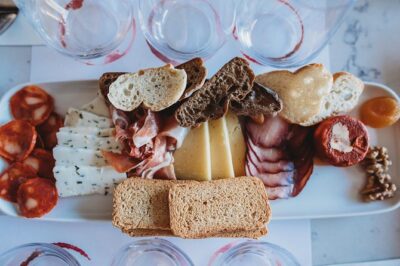
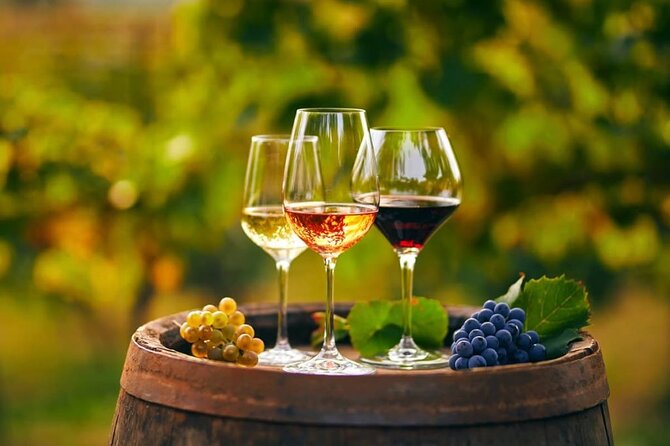
- Taste many varieties of locally made wine from their collection.
- Pair those wines with local delicacies.
One of the best parts is the tasting setup. You may have the chance to sample a large number of wines, including around 18 self-service pours. That means you can find your favorites without being locked into just a couple “presentation” glasses.
You’ll also hear about the winery’s family-friendly approach. The winery is open for families, and kids get a special platter and selectively crafted drinks by the winery family. So if you’re bringing younger travelers, this stop is designed to be easier than some adult-only wine experiences.
What you’ll taste (and what to expect at each stage)
This isn’t a formal multi-course dinner tour. It’s more like a guided food circuit where you sample, learn, then sample again.
From the overall flow, expect:
- Olive-related culture: seeing the grove and learning the olive story.
- Bread and savouries: bakery time with traditional items like rusks and bread.
- Honey context: learning how honey is made in the region.
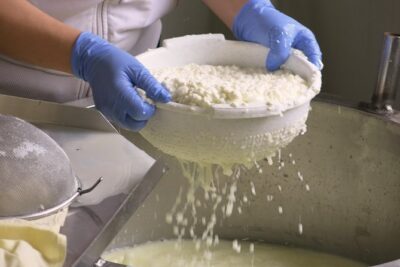
- Cheese: cheese shows up as part of the production/tasting experience on the day.
- Olive oil: olive oil is part of the food circuit (and often paired with the olive grove context).
- Wine: a real winery tasting session with multiple varieties.
And yes, you’ll probably leave feeling full—just not the same way you’d feel after a restaurant meal. It’s more spread out across the day, so energy stays more stable. Still, start with breakfast unless you’re ready to snack at multiple stops.
Cash vs cards: the one wallet rule
If you take one thing from this review, make it this: bring cash for the bakery.
Cards are accepted at many places during the day. But the bakery can be an exception, and when that happens, it becomes annoying fast—especially if you want to buy savouries or bread-type treats to take home.
So I’d plan like this:
- Pack some cash for bakery purchases.
- Keep your card handy for everything else that’s card-friendly.
- Don’t assume every food purchase will be card payment.
The guide makes the day: pacing, questions, and real talk
A big part of whether this type of day trip feels great is the guide. The tone here is friendly and energetic, with explanations that stay focused on what you’re seeing.
One guide name that comes up is Linda. Her style was described as dynamic and very friendly, and she could provide information in multiple languages, including Greek, French, and even West-Flemish (Dutch dialect). Even when your language isn’t one of those, you’ll still benefit from the way the tour frames each stop.
Also, the group size cap is up to 50 travelers. That’s not “tiny,” but it’s also not huge. It gives you a decent chance to hear what’s happening without feeling totally lost in a crowd.
Who should book this tour (and who might want something else)
This tour fits best if you want a day that’s:
- Food-centered, with production context, not just tastings.
- A mix of culture and eating: olive tree + bakery + wine.
- Guided enough that you don’t have to figure out logistics across multiple sites.
It’s also a good pick if you’re traveling with someone who likes learning facts but still wants to taste their way through Crete.
You might want a different option if:
- You hate bus time and early starts.
- You need a very slow, unhurried itinerary.
- You only want winery tasting and nothing else—this day includes a lot of “food production” stop time before the wine.
Weather and comfort: a practical heads-up
This experience requires good weather. If weather turns poor, the tour can be canceled and you’ll be offered a different date or a full refund.
Comfort-wise, you’re on a bus for travel between stops, and the bus ride is part of the day’s reality. The overall pacing is still stop-based, so you get chances to stand, look around, and reset your legs.
Should you book the Cheese and Wine Tasting Tour From Chania?
If you’re deciding whether it’s worth it, I’d say book it when your goal is a complete Cretan food day. For the price, you get a lot of “why this tastes the way it does” context: an ancient olive landmark, real bread and honey learning, cheese/olive oil time, and a family winery tasting in Kissamos.
Skip it only if you’re very time-sensitive, dislike morning starts, or hate traveling between multiple locations in one day.
If you do book, pack a simple kit: cash for the bakery, comfy shoes, and a good breakfast appetite mindset. Then you’ll get a day that feels like Crete in layers, not just a quick hit of alcohol and cheese.
FAQ
How long is the Cheese and Wine Tasting Tour from Chania?
The tour runs about 7 hours (approximately).
What is the price per person?
The price is $42.06 per person.
What time does the tour start, and where do I meet?
The start time is 8:00 am. Pickup is offered from your hotel or close to your hotel, and you receive a voucher with pickup time and pickup point one day before the tour.
Is the tour offered in English?
Yes, the tour is offered in English.
Is admission included for all stops?
Admission tickets are free for Vouves and for Perivolakia. The winery stop includes tasting (and local delicacies) as part of the visit.
What wine and food is included at the winery?
At Pnevmatikakis Winery, you’ll taste many varieties of locally made wines together with local delicacies. Kids get a special platter and drinks that are selectively crafted by the winery family.
Do I need cash during the tour?
Bring cash for the bakery. Cards are accepted at many places, but the bakery may require cash for purchases.
What happens if weather is bad?
This experience requires good weather. If it’s canceled due to poor weather, you’ll be offered a different date or a full refund.