REVIEW · SAO JORGE ISLAND
Sao Jorge Cheese Tour – Half day
Book on GetYourGuide →Operated by Jaime Fernando Bettencourt Pereira · Bookable on GetYourGuide
Hand-milking cheese starts before breakfast. This half-day tour on São Jorge takes you from hand-milked cows in high pastures to the cooperative that makes São Jorge DOP.
I love the staged tasting: fresh milk plus São Jorge cheese at 3, 6, and 24 months, so you can actually notice how age changes texture and flavor. I also like the human side, with guides such as Jaime Fernando Bettencourt Pereira sharing island customs while you move between farm and factory.
One possible drawback: the factory portion can be closed on weekends and holidays, and the whole experience runs about 3–4 hours, so it’s not a long sit-and-snack kind of outing.
In This Review
- Key moments worth centering in your plans
- Half-Day Cheese Reality Check: What You’re Paying For
- From Velas or Calheta: Why the Route Matters
- Family Farm Stop in Calheta: Hand Milking, Fresh Milk, and Real Life
- Uniqueijo in São Jorge: How DOP Cheese Gets Made, Stored, and Packed
- Tasting São Jorge by Age: 3, 6, and 24 Months
- Timing, Waiting, and Getting the Most From a 3–4 Hour Day
- Who This Tour Suits Best (and Who Might Skip)
- Practical Tips Before You Go (So Nothing Gets in Your Way)
- Should You Book This São Jorge Cheese Tour?
- FAQ
- How long is the São Jorge Cheese Tour?
- Where are the pickup locations?
- Where are the drop-off locations?
- What’s included in the price?
- Are meals included?
- What languages are the tour guides?
- Is the group private?
- What does the cheese tasting include?
- Can I taste milk during the tour?
- Are cheese factories open every day?
Key moments worth centering in your plans
- Hand milking at a family farm: See the process up close, not in a display-kiosk way.
- Fresh milk tasting: You get to taste milk in its most natural state before it ever becomes cheese.
- Uniqueijo (the São Jorge cooperative) stop: Learn how São Jorge DOP is produced, stored, packaged, and sold.
- Cheese tasting across aging stages (3, 6, 24 months): This is where the tour becomes really educational.
- Two pickup areas (Velas or Calheta) with transfers included: Less hassle, more time listening.
- Bring warm layers: Even in good weather, high-altitude pasture time can feel chilly.
Half-Day Cheese Reality Check: What You’re Paying For
At $111 per person for roughly 3–4 hours, this isn’t the cheapest thing on São Jorge. But it does include the parts that usually cost extra if you DIY: transfers, a guided tour, a family-farm visit, the cooperative/factory stop, cheese tasting, and insurance. Meals aren’t included, so you’ll want to plan something after.
What makes the price feel more like value than a gimmick is the structure. You’re not just shown a factory wall and handed a bite. You start with the most basic step—milk, from cows milked by hand—and then you move into how that milk becomes São Jorge DOP cheese through different stages of maturation. That flow is the whole point.
Also, the tour is described as a private group. That matters more than people think. Fewer time-wasting logistics, more room for questions, and a guide can actually tailor explanations to what you’re curious about—whether it’s dairy tech, island life, or why aging changes what you taste.
If you’re a casual cheese fan, you might feel the time limit. If you want a relaxed, slow-food afternoon with a long meal, you’ll probably prefer something else. This is hands-on, educational, and tasting-focused.
From Velas or Calheta: Why the Route Matters

You get two pickup options: Velas or Calheta. Transfers are included, and that’s a quiet win on São Jorge, where getting around can eat time fast. It also helps you stay in the right headspace: you’re not scrambling for rides while trying to follow the guide’s explanations.
The tour moves between places on the island—family farm time first, then a cooperative/factory visit. Even though you’re not doing a full-day loop, the schedule still gives you contrast: you see the cows and pasture setting up high, then you see the production side with modern technologies and manufacturing methods.
One practical thing to remember: you’ll likely spend some time walking on uneven ground around farms. Comfortable shoes aren’t optional. And you’ll want water. It’s the kind of tour where you’re tasting and listening, and you don’t want to get dehydrated while waiting for the next stop.
If you’re sensitive to cold, pack warm clothing. The description specifically points to green pastures at higher altitude as part of what makes the cheese so good. Higher altitude also means changing conditions—wind, clouds, or sudden chill—so layers are smart.
Family Farm Stop in Calheta: Hand Milking, Fresh Milk, and Real Life
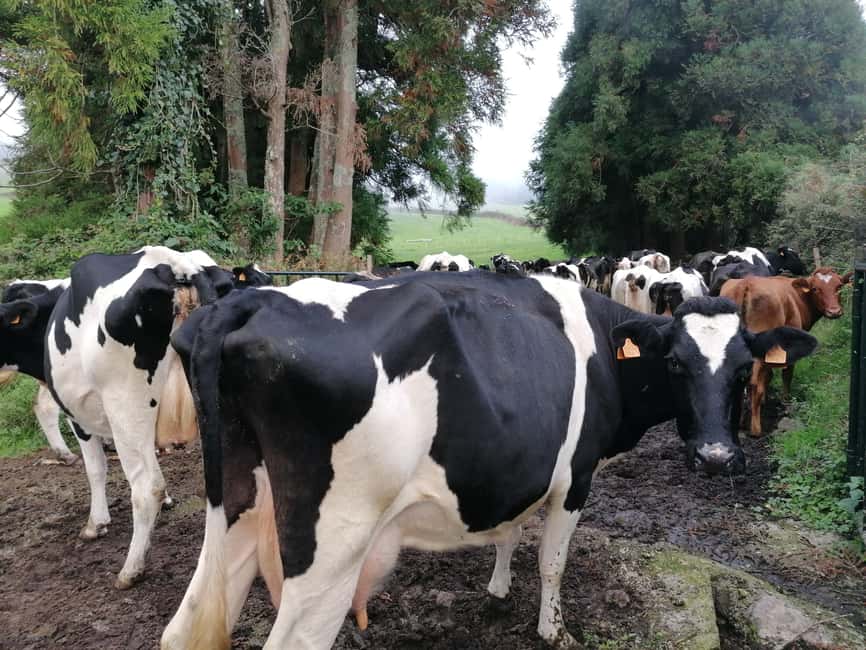
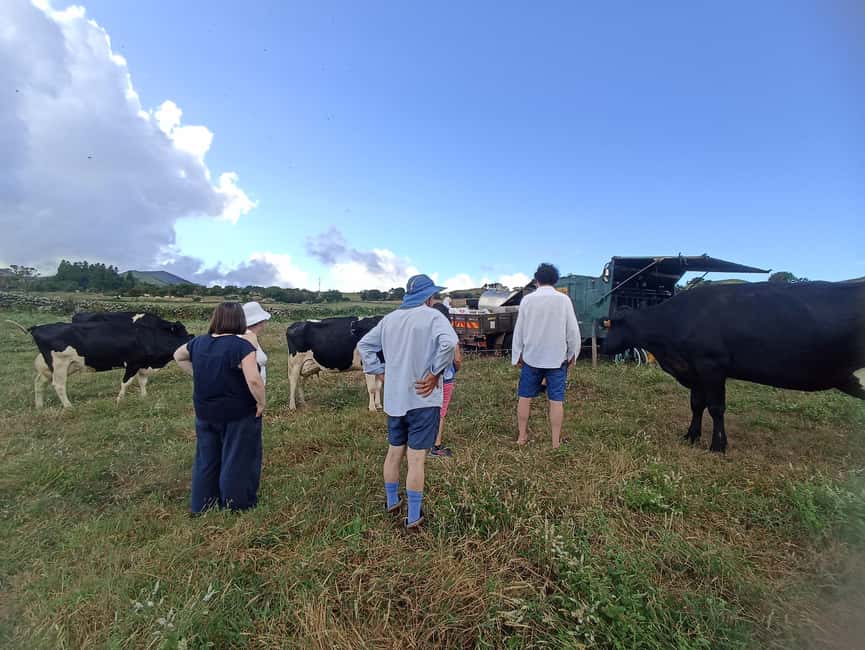
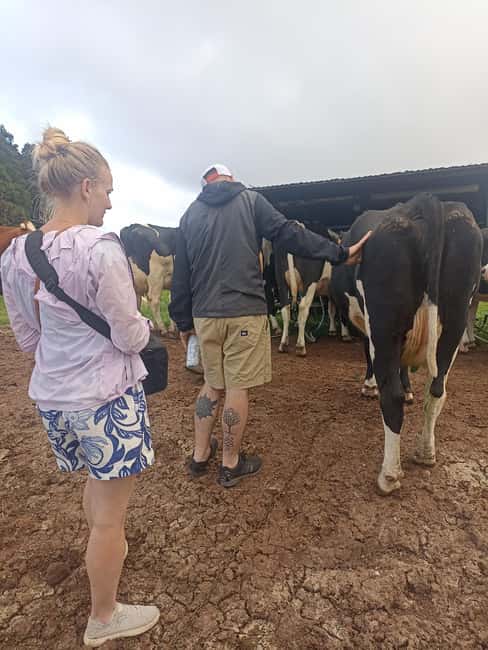
The tour includes a guided visit to a family farm in Calheta for about 2 hours. This is the moment most people come for: the traditional way of milking cows by hand. You’re not just hearing about dairy history—you’re watching how it’s done.
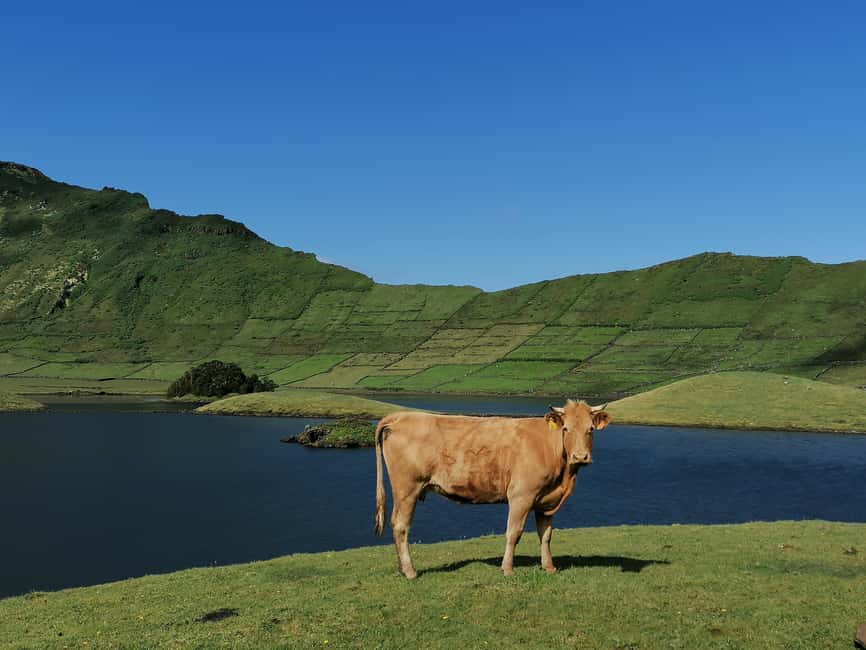
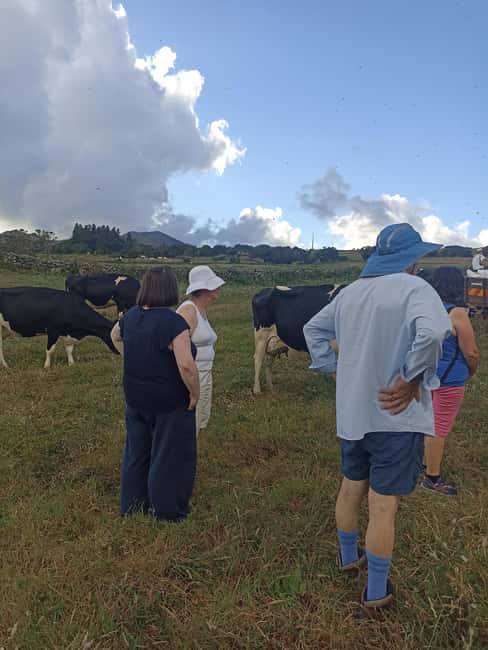
This stop is also where the island’s geography turns into food. The cows are kept in their almost natural habitat—green pastures at high altitude on São Jorge. That’s more than scenery talk. Pasture conditions influence what ends up in the milk, and the tour’s whole story hinges on that link.
Then comes the tasting that makes this stop feel concrete: you can taste milk in its most natural state. Fresh milk has a different character than milk you’re used to from a carton. It can taste richer, more delicate, and less processed. If you’ve never tried fresh milk from the source, this part tends to click fast.
One extra layer you might hear from the people running the farm is that milking isn’t only a mechanical routine. At least one guide/farm host, described as Sr. Humberto, shared details about how there’s a kind of hierarchy during milking—something the cows themselves apparently handle among them. That kind of local detail is exactly what you want from an island dairy experience: practical, lived-in knowledge, not just marketing language.
Downside to keep in mind: farm-time pace can vary. One participant mentioned that parts felt unorganized with longer waits. Even if that’s not your day, build in patience. This is agriculture. Things can run on farm rhythm, not city-schedule precision.
Uniqueijo in São Jorge: How DOP Cheese Gets Made, Stored, and Packed
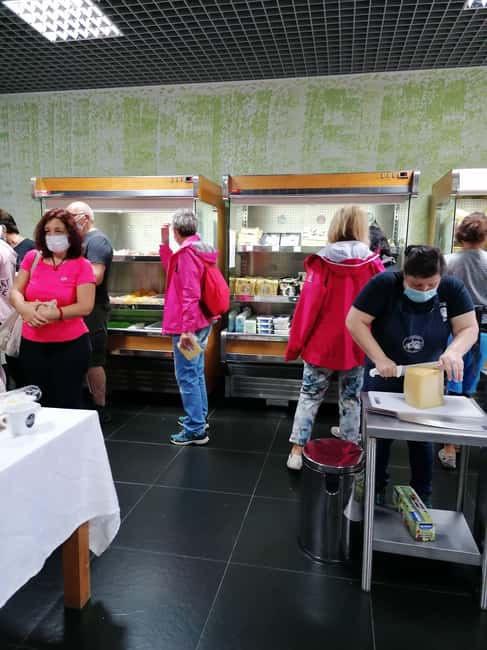
After the farm, you’ll visit the Union of Agricultural and Dairy Cooperatives of São Jorge—Uniqueijo. Expect about 2 hours here. This is where the tour connects tradition to production.
The cooperative makes São Jorge DOP cheese using modern technologies and manufacturing methods. That phrasing matters. You’re not being asked to choose between old and new. You’re shown how traditional product standards and maturation expectations can sit alongside modern processing.
At Uniqueijo, you should expect to learn what happens after milk processing: production, storage, packaging, and sales. This stop is useful because it explains how a “local” cheese becomes a consistent product while still reflecting São Jorge’s identity.
The tasting here also gives you the bigger education payoff. You’re not only eating cheese—you’re learning to read the cheese. The tour is set up to help you notice how maturation changes texture and flavor, not just how delicious it is in the moment.
This is also the stop most impacted by closures. Cheese factories are closed on weekends and holidays, so if you’re traveling on a date that might fall into that window, you’ll want to double-check availability before counting on Uniqueijo as the centerpiece.
Tasting São Jorge by Age: 3, 6, and 24 Months
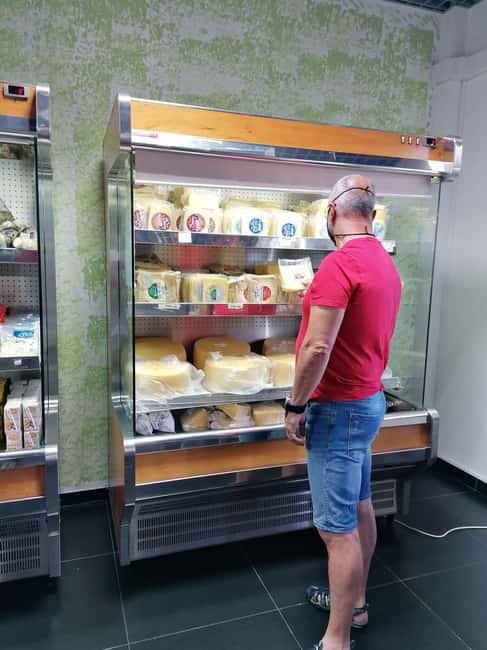
This is the tour’s strongest teaching tool. You’ll taste São Jorge cheese in different stages of maturation: 3, 6, and 24 months. That’s a big deal because age is one of the clearest variables you can taste, and most cheese tours only offer one sample or two.
So what should you pay attention to while tasting?
- Texture changes as it ages. Younger cheese often feels softer and more elastic, while older cheese tends to become firmer with more defined character.
- Flavor shifts. Younger stages can feel milder and fresher, while older stages often bring deeper, more intense notes.
- Aroma also evolves. Even if you don’t call it “notes,” you can usually sense how the smell gets stronger and more complex with time.
The milk tasting earlier supports this. Once you taste fresh milk, then the cheese at 3 months, you start connecting the dots yourself. You see that cheese isn’t a magical shortcut; it’s transformation over time.
Balanced reality check: one participant felt the tasting wasn’t particularly special beyond the highlights. That doesn’t mean the tasting is bad—it may just mean expectations vary. If you’re someone who wants very long, repeated tastings, you may wish there were more time. But for a half-day tour, the 3–6–24-month sequence is a smart way to get maximum learning with limited time.
Timing, Waiting, and Getting the Most From a 3–4 Hour Day
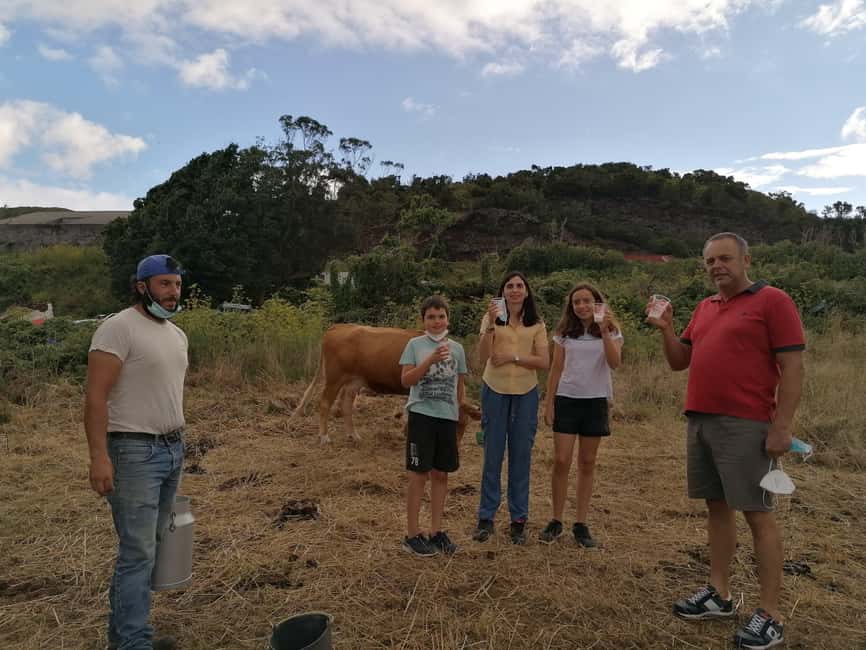
This tour runs about 3–4 hours. That’s short, so every transfer and explanation matters. I’d treat it like a focused workshop, not a casual wander.
What you can do to get the most value:
- Wear comfortable shoes you trust on uneven ground.
- Bring warm clothing, especially if weather shifts.
- Pack water so you’re not thirsty mid-tasting.
- Have your camera ready, but don’t make photography your main job—listen first, shoot second.
Also, keep your day structured around the tour. Since meals aren’t included, you’ll want to eat before or after. If you’re the type who forgets to eat, this is a reminder that cheese tours can accidentally turn into sugarless, snack-only days.
If your timing feels a bit slow between stops, accept it. Agriculture doesn’t always follow a tight timeline. Even the most smoothly run tours may include waiting due to operational rhythm at farms and production areas.
Who This Tour Suits Best (and Who Might Skip)
You’ll probably love this tour if:
- You’re a cheese person, or you want to become one fast.
- You like learning through food process, not just tasting without context.
- You enjoy cultural details about how people live on São Jorge.
- You want a guided, private-group experience with less hassle than piecing together transport on your own.
You might hesitate if:
- You expect a long meal or a full-day island sightseeing plan.
- You’re visiting on a weekend or holiday and are counting on the factory stop without backup.
- You’re sensitive to schedule changes between farm and cooperative areas.
One more fit check: this is offered in English and Portuguese. If you prefer one language, confirm your pickup time and guide language ahead of time so you don’t lose anything in translation.
Practical Tips Before You Go (So Nothing Gets in Your Way)
Here’s what I’d pack and prep based on what the tour asks for:
- Comfortable shoes (farms are rarely flat and polished)
- Warm clothing (bring layers)
- Camera (you’ll want to capture cows, pastures, and the production process)
- Water (tastings can make time fly, and thirst shows up quickly)
If you’re traveling from Velas or Calheta, use the day to keep things simple: the tour includes transfers, so avoid scheduling other timed activities right around pickup.
And do this one check: since factories are closed on weekends and holidays, make sure your travel dates align with open production. If not, you may end up with less of the “Uniqueijo” part than you planned for.
Should You Book This São Jorge Cheese Tour?
I think this tour is a strong booking for the right traveler. If you want hands-on dairy education—hand milking, fresh milk tasting, and then a structured walk through São Jorge DOP production with age-based tastings—you’ll come away with something you can actually remember and talk about.
Skip it (or choose another plan) if you’re mostly after scenic cruising or a long sit-down meal, because this is process + tasting in a tight half-day window. Also, double-check your dates if you’re traveling on a weekend or holiday; you don’t want to plan your whole cheese day around a stop that can close.
If your goal is to understand why São Jorge cheese tastes the way it does—starting at pasture level and ending at maturation stage—this is one of the best ways to do it without turning your trip into a logistics puzzle.
FAQ
How long is the São Jorge Cheese Tour?
The tour duration is approximately 3–4 hours.
Where are the pickup locations?
You can be picked up from either Velas or Calheta.
Where are the drop-off locations?
Drop-off is at Calheta or Velas (matching the pickup option).
What’s included in the price?
The tour includes transfers, a guided tour of a family farm, a visit to a cheese factory, cheese tasting, and insurance.
Are meals included?
No. Meals are not included.
What languages are the tour guides?
The tour is available with guides who speak English and Portuguese.
Is the group private?
Yes, it is a private group.
What does the cheese tasting include?
You’ll taste São Jorge cheese at different maturation stages: 3, 6, and 24 months.
Can I taste milk during the tour?
Yes. You’ll taste milk in its most natural state.
Are cheese factories open every day?
Cheese factories are closed on weekends and holidays, so plan dates accordingly.