REVIEW · GOUDA
Self-Guided Walking Tour of Gouda: Canals, Colonies, and Cheese
Book on Viator →Operated by VoiceMap Audio Tours · Bookable on Viator
Gouda tells stories at street level. This self-guided VoiceMap GPS walk strings together cheese-making, trade routes, and major landmarks into a route you can control, pause, and resume as you go. What I like most is the mix of practical sightseeing stops and the way the audio turns everyday places into clear stories you can actually picture.
Two wins for me: the narration is in English, and the tour is built so you can explore at your own tempo instead of rushing. One thing to consider: you’ll need your own smartphone and headphones, and finding De Goudse Waag at the start can take an extra minute if you’re relying on coordinates alone.
In This Review
- Key Highlights
- Finding De Goudse Waag: the start that sets the tone
- Kaaswinkel Gouda: cheese lessons that don’t feel like a lecture
- Stadhuis van Gouda and Saint-John Church: Gothic architecture with a reason
- Museum Gouda courtyard moments: art and local culture at walking speed
- Turfmarkt canal and the city’s trading engine
- Lage Gouwe stumbling stones: a serious stop done carefully
- Breweries and monasteries: the liquor-store stop that explains industrial Gouda
- Peperstraat: spice trade roots in a street you can actually walk
- ’t Slot windmill and tulip-season timing for the best photo
- Vissteeg and Visbank: fish trade history along a working-feeling route
- Park Houtmansplantsoen: a green break with a dark past
- How the VoiceMap audio experience actually works on the ground
- Price and value: $9.99 for a route that teaches more than it shows
- Should you book this Gouda walking tour?
- FAQ
- Where does the tour start?
- Where does the tour end?
- How long is the walking tour?
- What does it cost?
- Is the tour available in English?
- What do I need to bring?
- Is offline access included?
- Can I explore at my own pace and pause for shops?
- Can I cancel for a refund?
Key Highlights
- Kaaswinkel Gouda cheese co-op learning stop: How Gouda became a name on the world stage
- Stadhuis van Gouda fire-proofing idea: A Gothic city hall built in a field to reduce fire risk
- Lage Gouwe stumbling stones: A respectful way to understand WWII losses in the city
- Trade-route walkthroughs: Turfmarkt (peat), Peperstraat (spices), Vissteeg/Visbank (fish)
- ’t Slot windmill photo moment: Especially good in spring with tulips
Finding De Goudse Waag: the start that sets the tone
Start at De Goudse Waag, the historic goods weighing house in the market square at Markt 35, 2801 JK Gouda. It’s a smart first anchor because it immediately connects Gouda’s past business with what you’re about to hear on the audio track. Look for the market-square setting; that location matters, because the tour begins when you’re in the right spot.
This is also where you’ll want to get your phone ready before you press play. Downloading or ensuring offline access is available helps you avoid awkward pauses mid-walk, especially on a busy day in the center. If you arrive by train, plan a little extra time just to get your bearings. One early snag people run into is hunting for the coordinates without noticing the landmark setting.
A quick tip: treat the first minute like a warm-up. Once you get used to pausing, resuming, and moving at walking speed, the rest of the route feels easier. And because this is self-guided, you’re free to stop for photos, a coffee, or a quick look in a shop.
You can also read our reviews of more tours and experiences in Gouda.

Kaaswinkel Gouda: cheese lessons that don’t feel like a lecture
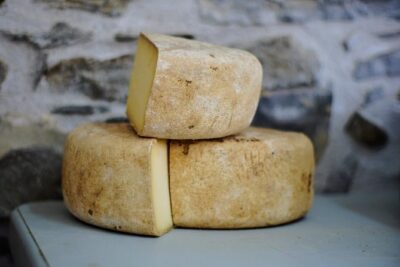
The audio next takes you to Cheese Farmers Co-op (Kaaswinkel Gouda), where you can learn what Gouda cheese is, how it fits into local production, and why it became famous far beyond the Netherlands. Even if you think you already know Gouda, this stop tends to change how you picture the process. Instead of just seeing cheese for sale, you start to connect the product to the co-op idea and the city’s role in distribution.
The value here is practical. You’ll walk away with a clearer sense of what makes Gouda distinct, so later shopping feels less random and more intentional. And because the tour is built around real locations, the cheese stop doesn’t feel tacked on. It’s part of a bigger story about why Gouda mattered in trade.
Don’t rush this section. If you like reading labels and watching how places operate, you’ll want a few minutes to slow down. If you’re the type who likes to compare cheeses as you go, this is the moment to do it.
Stadhuis van Gouda and Saint-John Church: Gothic architecture with a reason
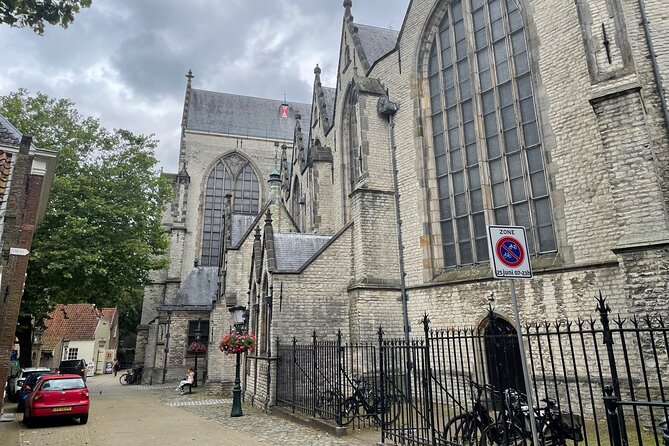
From cheese to city power: you’ll see Stadhuis van Gouda (city hall), built in the middle of a field to prevent it from catching fire. That detail is more than trivia. It shows how people once planned for danger, using layout and materials to reduce risk. On a walking tour like this, you start seeing architecture as a practical tool, not just a pretty facade.
Next is Saint-John Church, known for its stained glass windows and for its remarkable history. This stop works well if you like when an audio track points out what to look for, not just what the building is. Stained glass can be hard to appreciate quickly, so the audio helps you give it the time it deserves.
One consideration: churches and major landmark areas can have changing access depending on events or viewing hours. Your audio tour doesn’t replace visiting rules, so if you want a closer look, keep an eye on what’s open when you’re there.
Museum Gouda courtyard moments: art and local culture at walking speed
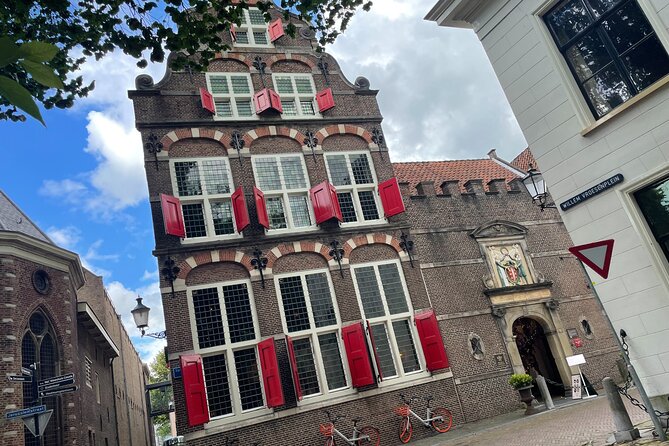
The route includes Museum Gouda, with attention on its courtyard. Even if museums aren’t your main priority, a courtyard stop is a good way to reset your energy. It gives you a pause point between heavier stories and more outdoor canal scenery.
This is also a useful stop for travelers who like context. Museums can help you connect what you’re seeing on the street to broader themes: local art, city life, and cultural identity. The audio doesn’t ask you to treat everything like homework; it’s meant to steer your attention so the city becomes easier to read.
If you decide to go inside, that’s your choice. The self-guided format is built for flexibility, so you can use the museum area as a quick look or a longer break depending on your mood.
Turfmarkt canal and the city’s trading engine
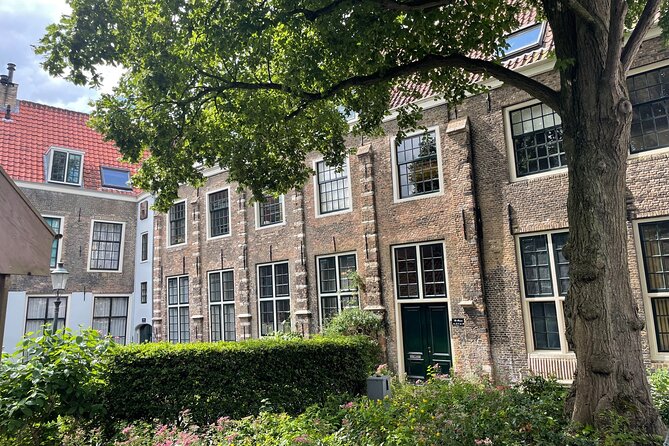
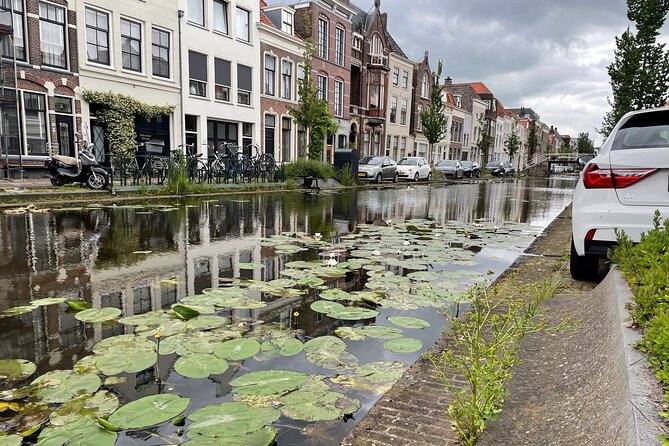
Then it’s on to Turfmarkt, a long canal that was once the central marketplace for peat. This is where Gouda’s trading brain clicks into place. Peat may not sound glamorous, but it was a key fuel source, and canals were the efficient highway for moving goods.
Walking along a canal on an audio tour changes how you perceive the streets. Instead of viewing water as scenery, you start seeing it as logistics—old supply lines that shaped where people built, worked, and gathered. If you enjoy economic history without the heavy textbook tone, this section delivers it in a way that’s easy to follow.
When you’re near Turfmarkt, take a moment to watch how the canal frames the buildings. The city’s layout starts to make sense as you connect today’s walk to yesterday’s commerce.
Lage Gouwe stumbling stones: a serious stop done carefully
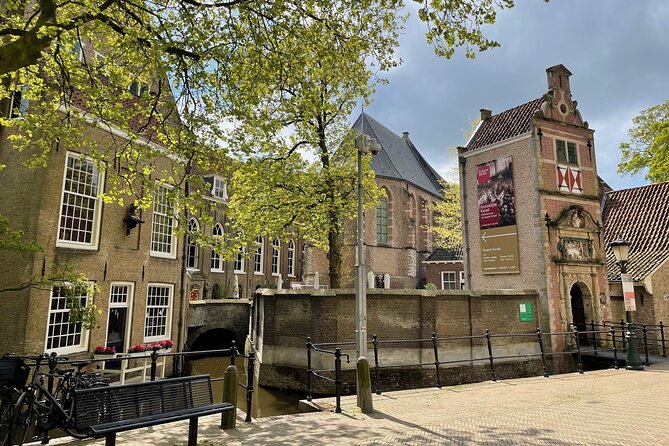
One of the most meaningful parts of the walk is the story of Gouda’s Jewish families during the Holocaust, marked by stumbling stones along the pavements of Lage Gouwe. This isn’t just added context; it’s a reminder that city history includes real loss and real people.
A self-guided audio format works well here because you control your pace. You can stand longer, listen quietly, and move on when you’re ready. You don’t have to match anyone else’s timing, which matters for a topic like this.
I suggest treating this segment with care: slow down, keep your phone brightness low, and give the names and locations your full attention. If you’re sensitive to difficult history, this may be a good point to pause and take a breath before continuing.
Breweries and monasteries: the liquor-store stop that explains industrial Gouda
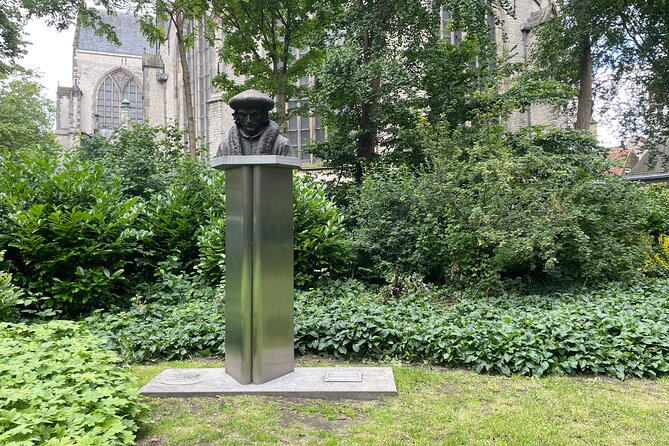
Next comes a stop at a liquor store designed to teach you about Gouda’s brewing history. The audio highlights how the city once hosted over 200 breweries and numerous monasteries, which helps explain why alcohol and brewing culture weren’t side notes in the local economy. They were part of how the city functioned.
This segment is a good example of why the tour is worth more than a basic sightseeing loop. It connects a modern retail stop to the city’s older production systems. If you like stories that connect everyday shopping to older industry, you’ll get a lot out of this.
Also, it helps you understand why places like this exist in the first place. You’re not just walking past doors. You’re learning why those doors mattered.
Peperstraat: spice trade roots in a street you can actually walk
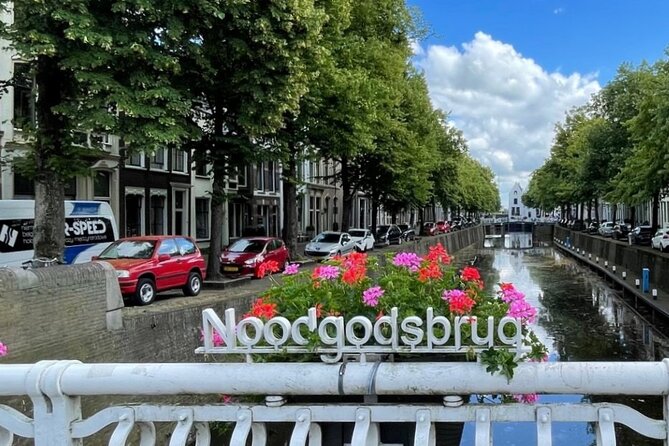
As you stroll down Peperstraat (Pepper Street), the audio explains its origins tied to Gouda’s spice trade during the city’s prosperous trading years. This is one of those “street name” stops that pays off, because you finally learn what the name is telling you.
Pepper sounds like a flavor detail, but in trade terms it was a high-value product. When you hear the story, the street feels more grounded in meaning. That’s the payoff of an audio route like this: it turns a simple walk into a guided interpretation.
If you like taking photos, this is also a good stretch to slow down and look at building lines. You’ll catch little details that you might otherwise miss.
’t Slot windmill and tulip-season timing for the best photo
For a classic Dutch moment, the tour includes ’t Slot windmill. It’s described as a picturesque photo spot, especially beautiful in springtime with tulips.
Even if you’re not visiting in spring, don’t skip the stop. Windmills have a way of anchoring the visual identity of the Netherlands, and your audio pause here helps you frame what you’re looking at. If tulips are in season when you’re there, plan extra time for photos and a short breather before continuing.
It’s also a good area to check the weather. If it’s windy or rainy, you’ll want to take cover nearby and keep your phone protected.
Vissteeg and Visbank: fish trade history along a working-feeling route
The next part takes you through Vissteeg and past the Visbank, tied to Gouda’s fish trade. The audio doesn’t treat fish as a side story. It frames the trade network that shaped daily life and food supply.
This section helps balance the cheese and brewing themes. It widens the picture from production (cheese) to power and organization (breweries and monasteries) and finally to what moved through the city to keep people fed. By the time you reach Vissteeg, Gouda feels less like a postcard and more like a functioning marketplace.
If you’re the type who likes commercial history, you’ll enjoy how the route keeps returning to trade through different angles, using canals, markets, and specific named spots.
Park Houtmansplantsoen: a green break with a dark past
The walk ends with Park Houtmansplantsoen, described as a green oasis that hides the city’s dark colonial and slavery past. This is another sensitive stop, and it works because you’re already warmed up to the idea that Gouda’s story includes more than monuments.
A park is a good place for reflection. You can step into a quieter mood, listen, and then decide how long you want to sit before moving on. The audio framing here matters because it doesn’t let you pretend history is only outside on plaques. It connects to the land itself.
When you’re ready, you’ll finish at Relais & Châteaux Weeshuis Gouda, at Spieringstraat 1, 2801 ZH Gouda.
How the VoiceMap audio experience actually works on the ground
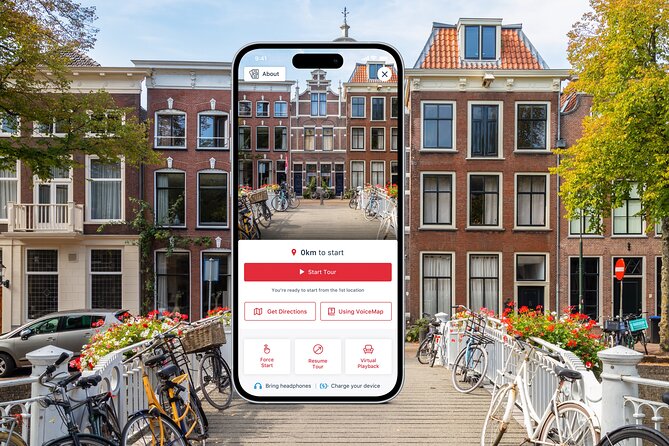
This tour is self-guided GPS, offered in English, and it’s designed to feel like an audiobook you can pause. You also get offline access to audio, maps, and geodata, which is a big deal when mobile data gets spotty in older city centers.
You don’t have to worry about group pacing. There’s no meet-up with a crowd mid-route. It’s private, meaning it’s just your group, and the tour is flexible enough for browsing. In practice, this kind of format is ideal if you like stepping into shops when something catches your eye.
Timing-wise, expect about 1 hour 15 minutes to 1 hour 30 minutes for the full walk. That’s short enough to fit into a half day in Gouda, but long enough to feel like you moved beyond the basics.
One practical thought: if you’re visiting solo, or if you’re comfortable using your phone as your guide, this tour style is a great fit. If you prefer a human guide to handle questions on the spot, you might find that you want more interaction during the more serious history segments.
Also, you’ll want smartphone and headphones. That’s part of the deal, and it’s the one real “bring your own gear” requirement.
Price and value: $9.99 for a route that teaches more than it shows
At $9.99 per person, this tour is priced like a small add-on, but it behaves like a mini education built into a walk. You’re paying for the audio route, the GPS navigation, and the offline pack. You’re also getting unlimited, lifetime use before your booking date and after it, which stretches value if you plan to return to Gouda.
The best value angle is how the route blends different themes in a single circuit: cheese, Gothic architecture, canal trade, and memorial stories. Many walking tours do one or two things well. This one tries to explain why Gouda works as a city, not just what’s photographed.
For a short, self-paced outing, that’s a strong deal. It’s especially good if you want to feel more “in the know” without paying for multiple paid attractions.
Should you book this Gouda walking tour?
Book it if you want a self-paced way to connect Gouda’s most famous sights with the trade stories behind them. I’d also recommend it if you like audio that points you to what to notice at each stop, and if you’ll appreciate the balance between cheerful classics like the cheese co-op and the tougher segments like Lage Gouwe and Park Houtmansplantsoen.
Skip or reconsider if you don’t want to use your phone as your guide, or if you prefer a live guide for Q&A and deeper context. This tour is designed for listening and walking, not for interactive history discussions.
If your main goal is a quick stroll through highlights, you may find it feels like more than you need. If your goal is to understand Gouda as a working market town with big human history, then this is exactly the kind of walk that pays off.
FAQ
Where does the tour start?
It starts at De Goudse Waag, Markt 35, 2801 JK Gouda, Netherlands.
Where does the tour end?
The tour ends at Relais & Châteaux Weeshuis Gouda, Spieringstraat 1, 2801 ZH Gouda.
How long is the walking tour?
It takes about 1 hour 15 minutes to 1 hour 30 minutes.
What does it cost?
The price is $9.99 per person.
Is the tour available in English?
Yes. The audio guide and the written guide are in English.
What do I need to bring?
Bring your own smartphone and headphones.
Is offline access included?
Yes. You get offline access to audio, maps, and geodata.
Can I explore at my own pace and pause for shops?
Yes. The tour is self-guided GPS, and it includes a virtual playback option, so you can listen like an audiobook and take your time at stops.
Can I cancel for a refund?
Yes. You can cancel for a full refund if you cancel up to 24 hours in advance. If you cancel less than 24 hours before the start time, the amount paid is not refunded.