REVIEW · BUDAPEST
Budapest: Wine, Cheese, and Charcuterie Tasting
Book on GetYourGuide →Operated by Taste Hungary · Bookable on GetYourGuide
Hungarian wine feels different when it’s paired with stories. This sommelier-led tasting in central Budapest walks you through the major Hungarian wine regions and grape styles, while you actually taste them, not just read about them. I especially like the 5-wine format with full pours and the way the food follows along to teach your palate.
Two more things I’m fond of: you’ll get a proper board of Hungarian artisan cheese and charcuterie (including options like Mangalica pork sausages and smoked duck breast), and you’ll finish with a glass of Tokaj sweet wine, the kind of finish that makes the whole afternoon feel like a mini-voyage. One watch-out: the table includes meat-forward charcuterie, so if you avoid pork or other meats, this may be less comfortable than a wine-only tasting.
In This Review
- Key Things To Know Before You Go
- Where You’ll Be Tasting in Budapest
- Meeting the Sommelier: What the Host Actually Does
- The 5-Wine Lineup: A Simple Way to Understand Hungarian Wine
- Start of the tasting: building your Hungarian “taste map”
- Mid-tasting: pairing structure teaches your palate
- Finale: Tokaj sweet wine
- Cheese and Charcuterie Pairings That Don’t Feel Like a Lecture
- Bread and Artisan Oils: The Quiet Power Players
- Your Tasting Notes and the Hungarian Wine Map
- Price and Value: Is $50 Worth It?
- Who This Is Best For (And When to Skip)
- Practical Tips for a Smooth 90 Minutes
- Should You Book This Hungarian Wine and Cheese Tasting?
- FAQ
- What’s included in the $50 per person price?
- How long does the tasting last?
- Where do I meet the group?
- Are the wines only Hungarian?
- Is the tour guide available in English?
- How old do you have to be to join?
- Is there anything else to buy during the tasting?
- Can I get a refund if my plans change?
- Does the experience run every day?
- What if there aren’t enough guests to run the tasting?
Key Things To Know Before You Go
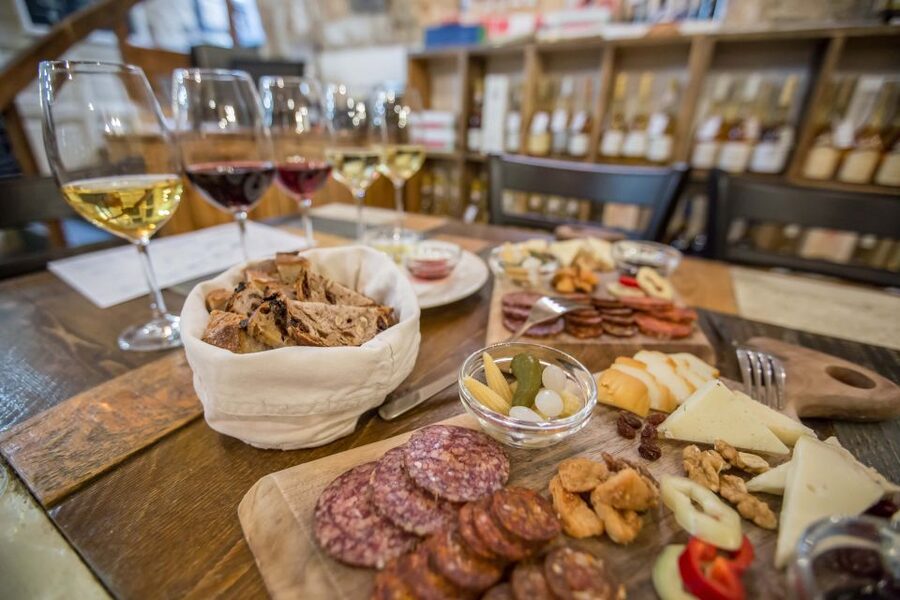
- Five full glasses of Hungarian wine in 1.5 hours, so it’s not a slow sip-and-smile session.
- Tokaj sweet wine is the final stop, giving you the signature Hungarian sweet story people talk about.
- Cheese and charcuterie sourced from producers, including examples like Mangalica, water buffalo salami, and grey beef sausage.
- Bread and artisan oils are part of the tasting, not an afterthought.
- You’re guided in English by a sommelier; past hosts have included names like Thomas, John, Bence, Sam, and Hashim.
Where You’ll Be Tasting in Budapest

This tasting takes place at The Tasting Table Budapest, Bródy Sándor utca 9 (District VIII). The location is practical: it’s about a 5-minute walk from Astoria (M2) and Kálvin tér (M3), and trams 47 and 49 also stop nearby.
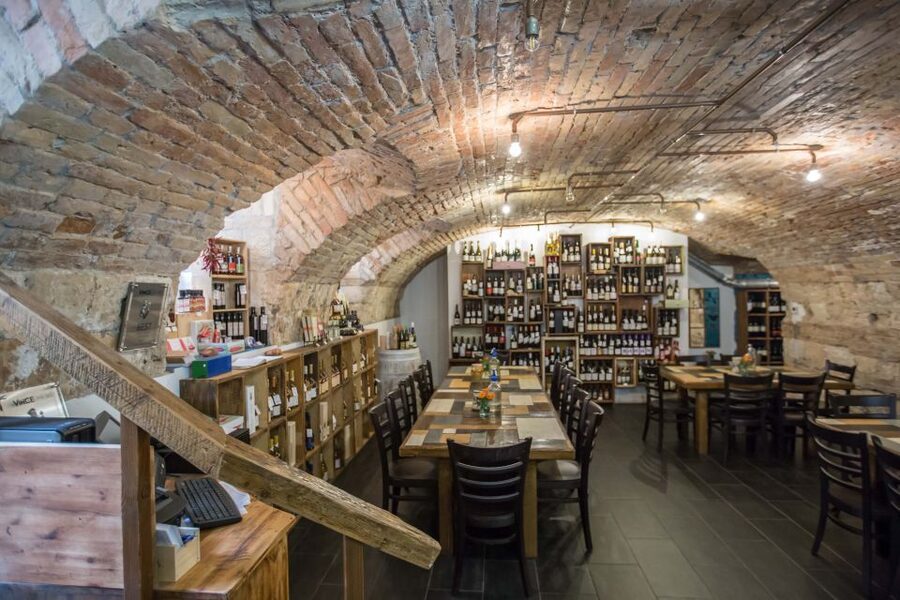
The setting matters here. You’re tasting in a shop-style room, and multiple guides and groups comment on the cozy, brick-arch vibe. That kind of atmosphere helps you actually focus on aromas and pairings instead of shouting over street noise.
Timing is also easy to plug into a day. This runs on most days from 3:00 PM to 5:00 PM, and the total time is 1.5 hours. If your Budapest itinerary is already packed, this is one of those experiences that gives you a lot of value without eating half the day.
You can also read our reviews of more tours and experiences in Budapest.

Meeting the Sommelier: What the Host Actually Does
This is not just pour-wine, smile, and leave. A live guide leads the session, and the whole point is that the tasting has an educational backbone.
Expect an introduction to Hungarian wine that covers:
- where Hungary’s wine comes from (major regions)
- what grapes are doing the work (important varieties)
- what those styles taste like in real life
- how Hungarian wine is evolving (current trends)
What I like about this approach is that it turns “I like it” into “I can describe it.” You start noticing differences between whites, reds, and that sweet Tokaj style—and you get enough structure to remember what you tasted later.
And yes, there’s personality. People consistently mention humor and engagement, which matters if you don’t want your wine lesson to feel like a classroom. Guides such as Thomas, Jon/John, Bence, and Sam have been cited in past sessions, and the shared theme is: the host talks in plain language and keeps the group moving.
The 5-Wine Lineup: A Simple Way to Understand Hungarian Wine
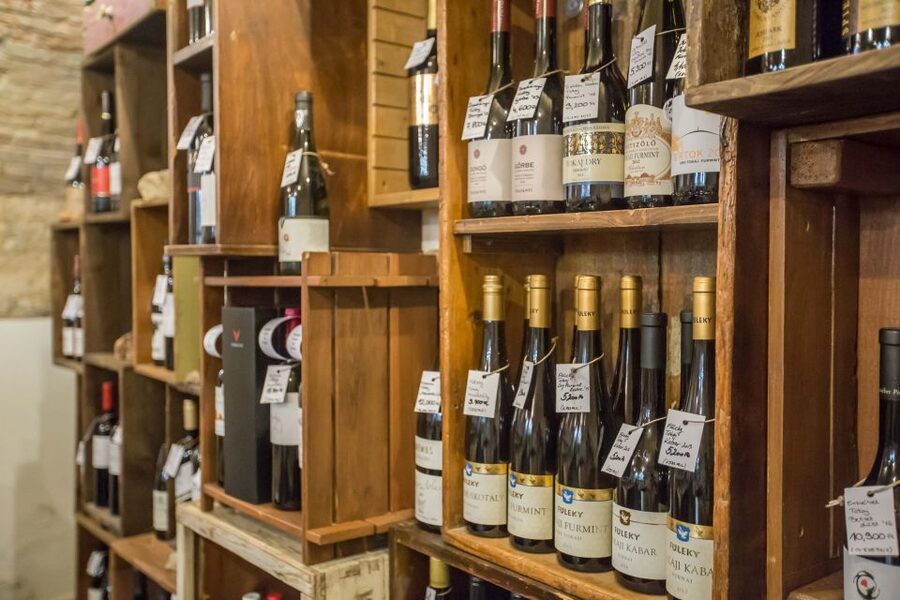
The heart of the experience is five Hungarian wines, each paired with something from the board. The best part is that the five wines aren’t random. They’re arranged to give you a broad overview of the country’s style—from the basics to the signature.
Here’s how the flow works in practice:
Start of the tasting: building your Hungarian “taste map”
You’ll begin with a guided series of tastings that introduce key regional and grape ideas. Since the experience focuses on indigenous Hungarian grape varieties and unique local styles, you may try bottles that you won’t easily see elsewhere. That’s a real advantage if you’re already tired of the same global names popping up everywhere.
The upside for you: you’ll leave with more than a memory of flavors. You’ll have a mental model for why those flavors show up.
Mid-tasting: pairing structure teaches your palate
As you work through the lineup, each wine comes with a matching cheese or charcuterie item. This is where you start noticing textures and salt levels—how fatty meats soften tannins, how aged cheese brings out savory notes, and how bread can reset your palate.
Finale: Tokaj sweet wine
The final glass is a sweet wine from Tokaj. Tokaj is widely recognized as one of the world’s great sweet-wine regions, and the tasting treats it as an essential part of Hungary’s wine story, not a random dessert pour.
If you’re the kind of person who thinks sweet wine is either too sugary or too “dessert-only,” this finale is the moment you’ll likely rethink it. You’ll taste it alongside food elements, which changes how the sweetness lands on your tongue.
Cheese and Charcuterie Pairings That Don’t Feel Like a Lecture
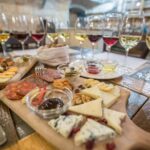
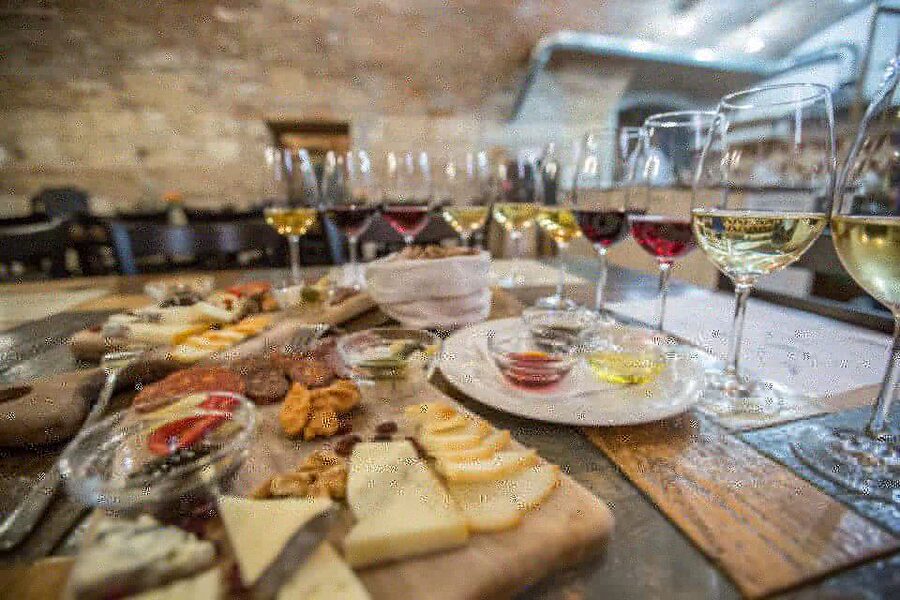
Food here is a core feature, not padding. You’ll get a local cheese and charcuterie plate paired across the tasting, with items that can include:
- Mangalica pork sausages
- free-range water buffalo salami
- smoked duck breast
- grey beef sausage
- various styles of cheese
Two things I appreciate about pairing tastings like this:
- You learn faster through contrast. If one wine tastes sharper on its own, pairing it with a fatty or salty item can show you exactly what’s driving the flavor.
- You get a sense of Hungarian craft, not just generic cured meat. These selections are described as coming directly from producers, which usually means the quality bar is high enough to matter.
That said, here’s the one consideration I’d flag before you book: the board is meat-forward. If you avoid pork or don’t eat cured meats, you may want to plan mentally for a tasting built around charcuterie.
One more practical note: multiple people mention there’s no pressure to buy, which makes it feel like an experience you can enjoy without turning it into a sales pitch.
Bread and Artisan Oils: The Quiet Power Players
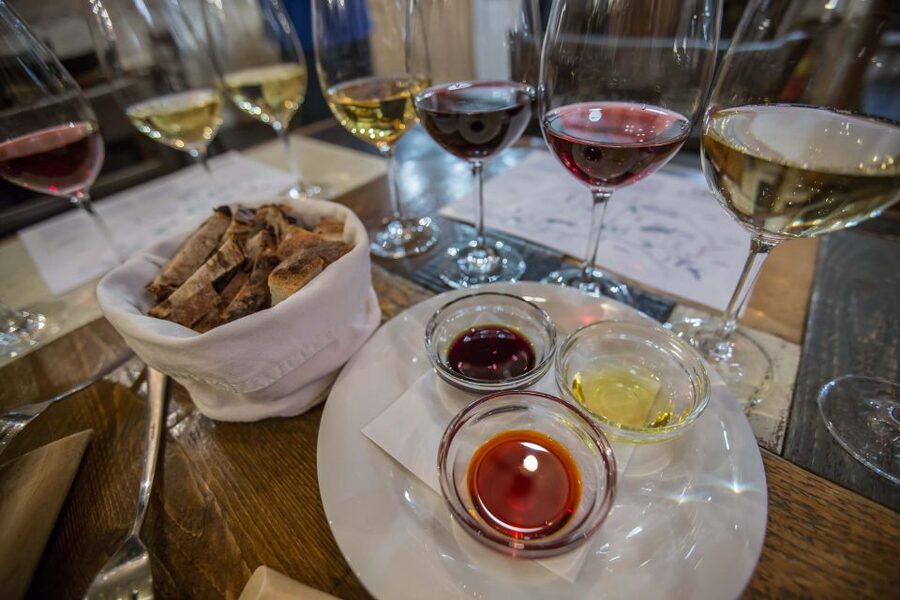
In many wine tastings, bread is just bread. Here, it’s part of the pairing language. You’ll taste bread and artisan oils, which is a neat reminder that flavor doesn’t only come from wine.
Bread can help you:
- soften the edges of acidity
- reset your palate between different styles
- slow down the tasting so you notice aroma and finish
The oils add another dimension—often a savory or herbal note that can make wines feel rounder or more aromatic. It’s also a good equalizer if someone in your group likes food more than wine.
If you’re the person who usually orders a snack and asks for bread everywhere you go, you’ll probably enjoy how much thought is given to this part of the table.
Your Tasting Notes and the Hungarian Wine Map
You’ll receive tasting sheets so you can take notes, and they include a map of Hungarian wine regions. This is a surprisingly useful detail because Hungarian wine can sound mysterious at first: regions have unfamiliar names, and grape varieties may not be on your usual “go-to list.”
The best practical value here is memory. Later, when you see a wine name at a shop or on a menu, you’ll have a way to place it:
- what region it likely points to
- what style it probably leans toward
- what you liked (or didn’t like) and why
If you’re traveling with someone who usually avoids wine jargon, these sheets help you “translate” the experience into something personal and easy to recall.
Price and Value: Is $50 Worth It?
At about $50 per person for 1.5 hours, value comes down to what you actually get, and you do get a lot for that price.
Included:
- 5 glasses of Hungarian wines
- a cheese and charcuterie plate
- bread and artisan oil
- tasting sheets with notes and a Hungarian wine regions map
A big reason this feels worth it is the “five glasses” part. People describe it as a generous tasting amount rather than tiny samples. When you’re paying for wine education, you want enough liquid to notice the differences. This format gives you that chance.
Also, the food isn’t an afterthought. It’s paired as part of the lesson, so you’re not paying for wine alone while eating on the side. That pairing structure is the value engine.
If you’re the kind of traveler who wants local, hands-on culture—wine and food made in Hungary—that’s exactly what this delivers.
Who This Is Best For (And When to Skip)
This experience is a great match if you:
- want a guided introduction to Hungarian wine without needing prior knowledge
- like learning through taste and food pairings
- enjoy regional specialties, not just famous global labels
- want a relaxed afternoon plan in central Budapest
It’s less ideal if you:
- avoid cured meats and pork-heavy boards
- prefer wine tastings where food is minimal (here, the food is part of the experience)
- need something kid-friendly; this one is not suitable for children under 18
Practical Tips for a Smooth 90 Minutes
Keep it simple and you’ll get more out of it.
- Pace yourself. You’ll have five glasses, plus bread, oils, and a full board. Slow down so you can actually taste each pairing.
- Come with questions. Even one curiosity—like why Tokaj is special—helps you get more from the sommelier’s explanations.
- Bring an open mind. Hungarian wine can surprise you, especially if your wine habits are stuck on the usual countries and styles.
- Save room for a takeaway. Some people mention buying a bottle from the tasting after the session, which can be a nice souvenir if you fall for a style.
Should You Book This Hungarian Wine and Cheese Tasting?
I’d book it if you want a smart, food-based way to understand Hungarian wine in a short window. The structure is friendly: 5 wines, paired cheese and charcuterie, bread and artisan oils, plus tasting sheets to help you remember what you learned.
The main reason not to book is food preference. Since the board includes meat items like Mangalica sausages and smoked duck breast, you’ll want to be comfortable with that style of tasting table.
If you’re in Budapest for a few days and you like wine, this is one of those experiences that makes the rest of your trip easier. After this, Hungarian wine names and styles won’t feel as mysterious, and you’ll know what to look for when you spot bottles later.
FAQ
What’s included in the $50 per person price?
The price includes 5 glasses of Hungarian wines, a local cheese and charcuterie plate, bread and artisan oil, and tasting sheets with notes and a map of Hungarian wine regions.
How long does the tasting last?
The experience lasts about 1.5 hours.
Where do I meet the group?
Meet at The Tasting Table Budapest, Bródy Sándor utca 9, 1088 Budapest (District VIII). It’s about 150 meters from the National Museum and a short walk from Astoria and Kálvin tér.
Are the wines only Hungarian?
Yes. The tasting focuses on Hungarian wines, with a lineup of five Hungarian wines and a final glass of sweet wine from Tokaj.
Is the tour guide available in English?
Yes, the live tour guide speaks English.
How old do you have to be to join?
The legal drinking age in Hungary is 18, and the tasting is not suitable for children under 18.
Is there anything else to buy during the tasting?
Additional food or drinks are not included, though you may have the chance to purchase wines after the session (based on what participants have said).
Can I get a refund if my plans change?
You can cancel up to 24 hours in advance for a full refund.
Does the experience run every day?
It’s available on most days from 3:00 PM to 5:00 PM, but you should check availability for the exact start time.
What if there aren’t enough guests to run the tasting?
There is a minimum number of 2 guests. If the minimum isn’t met after confirmation, you’ll be offered an alternative or a full refund.