REVIEW · FORMIGINE
Formigine: Parmesan cheese tour with full tasting
Book on GetYourGuide →Operated by Azienda Agricola Moscattini · Bookable on GetYourGuide
One whiff of Parmesan and you’re hooked. This farm tour turns Parmigiano Reggiano into a hands-on story: you’ll see how wheels are made, aged, and served, all wrapped in a family-business vibe. I especially like the farm-to-table feel, from copper cauldrons to the final tasting table.
Two big wins for me: the chance to watch key stages of production (including wheel-raising if you’re there early) and the end tasting that’s basically a small meal, not a few polite bites. One thing to consider: this experience isn’t for everyone, since it’s not suitable for vegans, it may not work if you have a gluten intolerance, and it’s not recommended if you have animal allergies.
In This Review
- Key things I’d circle on your map
- Parmigiano Reggiano at Azienda Agricola Moscattini: farm life meets real production
- The milk-to-curd moment: copper cauldrons and wheel-raising before 9:00 a.m.
- The first days, the brine, and the scalere aging shelves that change the smell
- Optional barn stop: point 0 processing, milking, and newborn calves
- The sfogline moment and why handmade pasta belongs on a Parmesan tour
- The tasting table: three ages of Parmigiano, wine or balsamic vinegar, tigelle, and cured meats
- How long is it, and what to expect from the pacing
- Price and value: is $39.86 worth 90 minutes of Parmesan?
- Who should book—and who should skip this one
- Should you book the Parmesan cheese tour?
- FAQ
- How long is the Parmigiano Reggiano tour?
- Where do I meet for the tour?
- What language is the tour guide?
- Is the tasting included in the price?
- What exactly do I taste at the end?
- Is wheel-raising included?
- Do I get coffee?
- Can minors have wine?
- Is the tour suitable for vegans?
- Is it wheelchair accessible?
- Can I take Parmesan home?
Key things I’d circle on your map
- Wheel-raising stage before 9:00 a.m. if your time slot is early enough
- Aging on scalere shelves and that unmistakable Parmesan smell
- Three ages of Parmigiano Reggiano paired with wine or balsamic vinegar
- Tigelle plus cured meats makes the tasting feel like lunch
- Optional barn stop for milking, cow feed, and newborn calves
- A family farm shop experience with time to browse and potentially shop
Parmigiano Reggiano at Azienda Agricola Moscattini: farm life meets real production
If you care about food that has a job to do, this is your kind of tour. Parmesan is one of those foods that feels famous everywhere, yet still mysterious in how it actually comes to life. Here, you don’t just taste the result. You watch the process that creates it, then compare how the flavors change with age.
The setting is also part of the value. You’re at Azienda Agricola Moscattini, an agricultural farm where cheese sits alongside other products they make and sell, including wine and balsamic vinegar, plus fresh handmade pasta. That matters because it gives you a more complete picture of how an Italian food business runs: same farm energy, different specialties, all connected by local tradition.
Another detail I like: the tone is warm. This is a family business, and it shows in how the visit flows from the farm store welcome into the tasting. It doesn’t feel like a scripted museum moment. It feels more like you’re being brought into their rhythm.
The farm also highlights animal welfare, not as a marketing slogan, but as something tied to how they care for the herd: nutrition, health, and general well-being. You won’t just hear about food. You’ll hear about the living part of the operation that makes food possible.
The milk-to-curd moment: copper cauldrons and wheel-raising before 9:00 a.m.
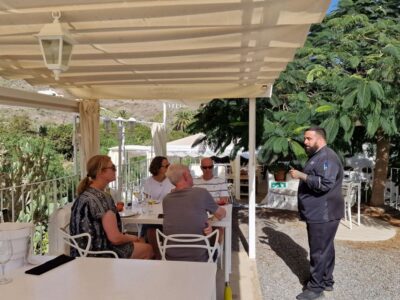
The visit starts in the farm store, where you check in by showing your reservation proof on your phone. From there, the guide sets the story of the family and the traditions around Parmigiano Reggiano.
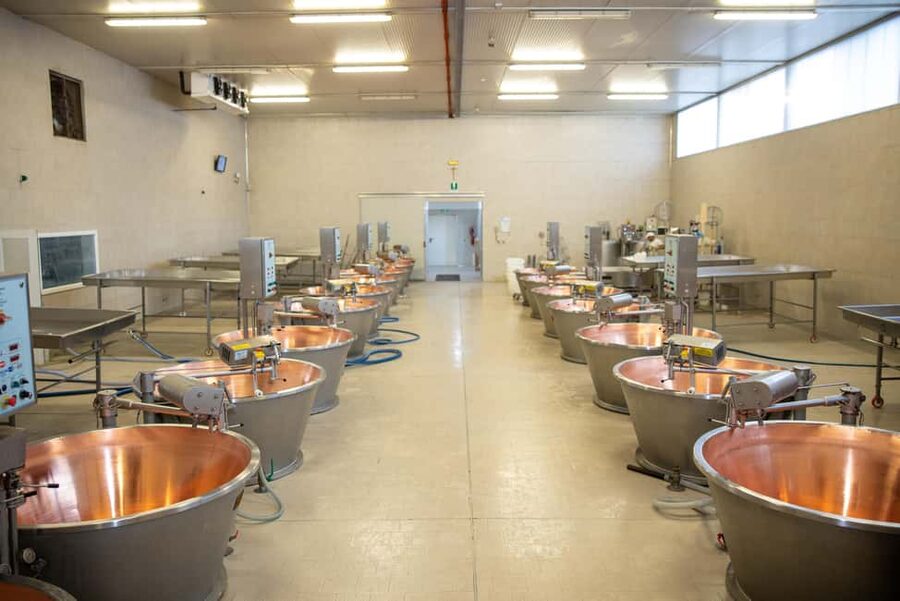
Then the real fascination begins. You’ll see the big copper cauldrons where milk is transformed into curds. Watching that stage is a small lesson in patience and precision. Cheese making isn’t about one dramatic trick. It’s about timing, temperature, and handling the milk carefully so it becomes the right texture.
One very specific highlight: until 9:00 a.m., you can also see the moment of wheel-raising, when the freshly made wheels are lifted from the boilers. That’s not the kind of thing you’d guess you’d get on a short tour, so if you’re planning your day around this experience, choose an early time slot if you can. Even if you don’t catch wheel-raising, you still get the key sights that make Parmesan feel real and mechanical, not magical.
As you move through, you’ll learn why each step matters. Curds don’t become cheese by accident. The whole process is built around care—how the curds form, how they’re handled, and how they’re prepared for the next phase.
The first days, the brine, and the scalere aging shelves that change the smell
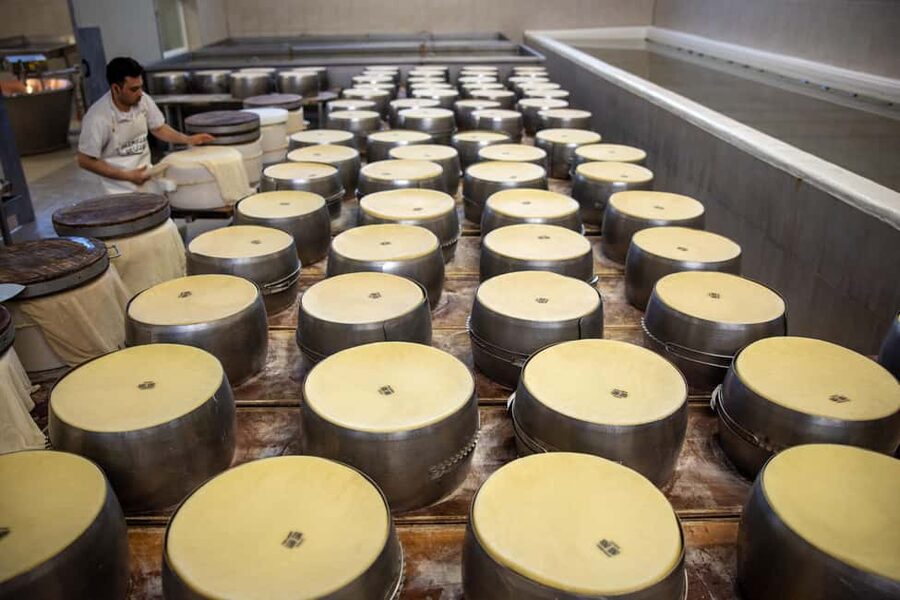
After the curds become wheels, the tour shifts to the waiting part of the process. You’ll see the room where wheels rest for the first three days after production. Then comes brining for weeks. This is the part where Parmesan turns from fresh product into future flavor.
Why does that staging matter? Because it explains the Parmesan you’ll taste later. Aging isn’t just time passing. It’s an active transformation—slow development of flavor and texture. If you’ve ever wondered why older Parmesan tastes sharper, nuttier, and more complex, this is where the logic starts.
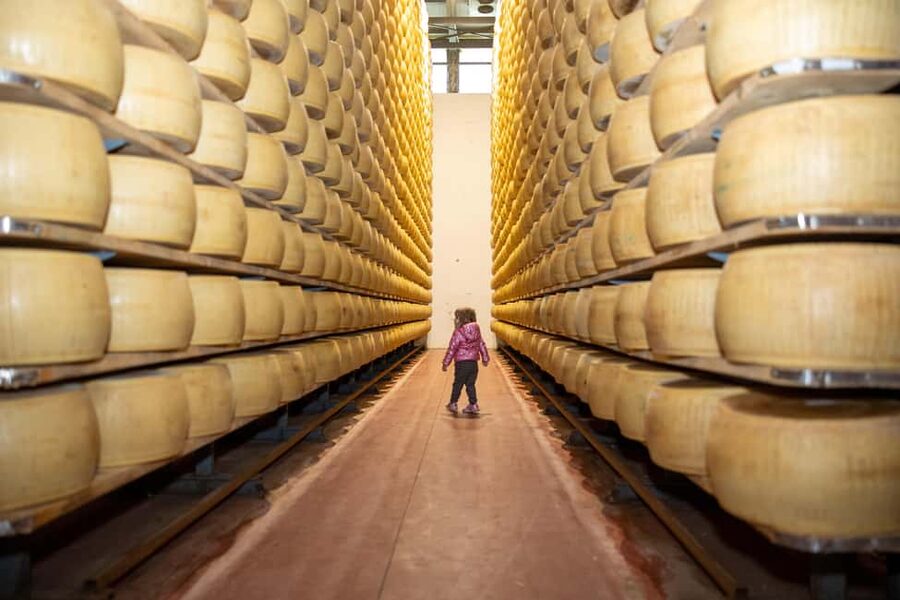
Next, you’ll visit the warehouse where the cheeses age on wooden shelves called scalere. This is where the atmosphere shifts. The smell gets intense. The sight of the wheels lined up is striking. It’s also a practical lesson: aging rooms aren’t clean and sterile. They’re working environments, full of the smells and conditions that allow the cheese to do its thing.
And yes, it’s great for photos. Not the usual tourist snapshot either. It’s the kind of picture that actually looks like Parmesan production, because you’re standing in the real aging space, not in front of a decorative display.
Optional barn stop: point 0 processing, milking, and newborn calves
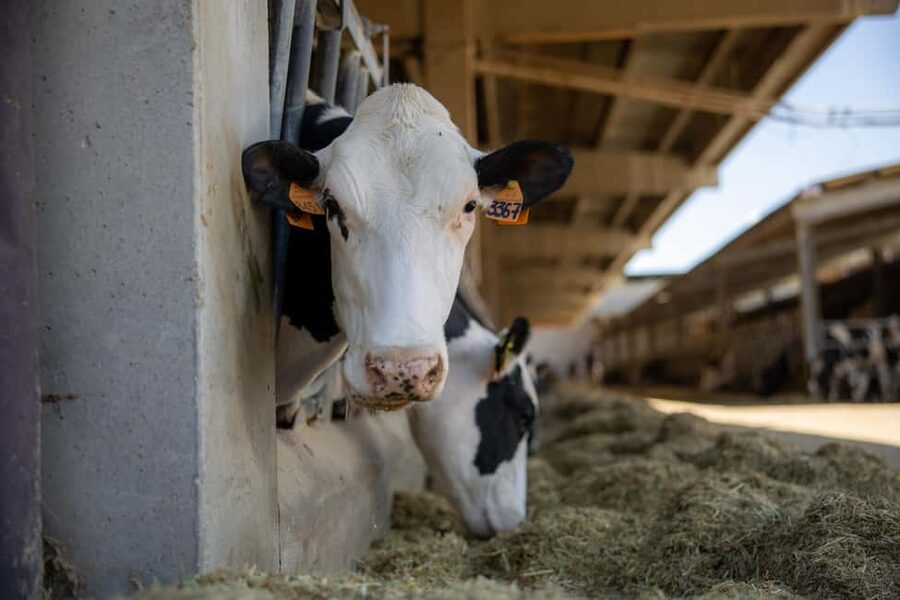
When you finish touring the dairy of your choice, you may be able to go to the barn for a look at point 0 of processing. That means milking, and a chance to see what the cows eat.
You’ll also be able to see newborn calves. This is the part that makes the tour feel more complete—and it’s also where you should check your comfort level. The farm rules explicitly restrict things like climbing and riding animals, but the core idea is still: you get to connect the herd to the cheese.
This stop is a nice add-on if you want the broader farm context. It helps you understand why animal welfare isn’t treated as a side note. It’s linked directly to how the milk becomes the foundation for Parmesan.
The sfogline moment and why handmade pasta belongs on a Parmesan tour
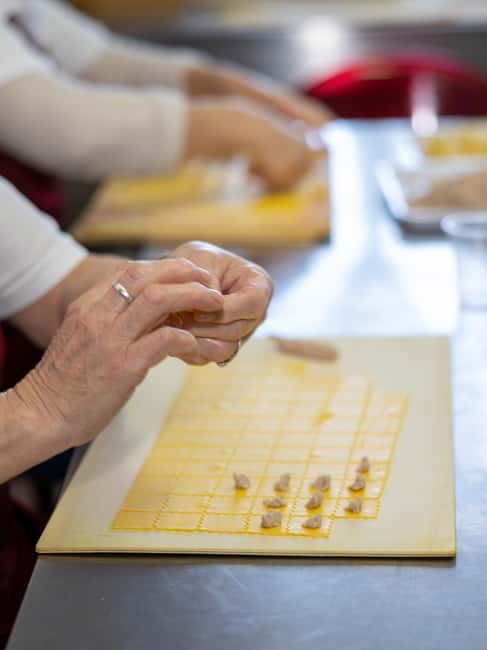
One of the highlights is that you can admire the sfogline at work. If you’ve never watched handmade pasta being rolled, it’s a great little contrast to cheese. Same farm culture, different craft.
Even though this isn’t a full pasta lesson, it helps you read the bigger picture: Italian food traditions aren’t isolated. The same people who care about cheese also care about pasta, wine, and balsamic vinegar. It’s all about skills passed down, tools used properly, and consistent quality.
The tasting table: three ages of Parmigiano, wine or balsamic vinegar, tigelle, and cured meats
The tasting is where the tour pays off. At the end, you’ll taste Parmigiano Reggiano of 3 different ages, and you’ll do it with helpful pairings that actually make the differences easier to notice.
Included in the tasting:
- Water
- Wine (or soft drinks if you’re a minor or if requested)
- Tigelle (these are the crescentine-style bread rounds)
- Sliced cured meats
- Plus pairing with local wine or balsamic vinegar
That combination is smart. Parmesan alone can be delicious, but pairing it helps you catch what changes with aging: the sharper edge, deeper savory notes, and a more complex finish as the cheese gets older. The guide will be available during the tasting to answer questions, which is useful because Parmesan has a lot of talk around texture and flavor. Having someone explain it in plain language saves you from guessing.
The tasting also has a generous feel. I like that it doesn’t operate like a quick snack. The experience is long enough that it feels like a meal. In practice, it can even feel like a light lunch, especially with tigelle and cured meats coming to the table alongside the cheese.
How long is it, and what to expect from the pacing
The tour runs about 1.5 hours. That’s a sweet spot. Long enough to see real production stages and make the final tasting meaningful. Short enough that you won’t feel stuck all afternoon.
The pacing tends to move from education (how Parmesan is made) to atmosphere (aging shelves and smells) to payoff (tasting). You also get small moments that help you reset: time for photos and time in the farm store afterward, where you can shop. If you like souvenirs that actually connect to what you just learned, this is a good system.
Also, since the tour is offered in English and Spanish, you won’t be left trying to piece things together from hand gestures.
Price and value: is $39.86 worth 90 minutes of Parmesan?
At $39.86 per person for about 1.5 hours, this isn’t a throwaway tasting. You’re paying for access: guided production sights, the chance to see stages of making and aging, and a structured tasting that includes multiple ages of Parmigiano plus bread and meats.
The value jumps because the tasting isn’t just one cheese. You get three ages, and they’re paired with wine or balsamic vinegar. Add tigelle and sliced cured meats and the whole thing becomes a real food experience, not a sample flight.
You’re also likely to appreciate the “family business” factor. When a tour is built around a working farm rather than a staged show, the guide’s explanations feel more grounded. Even better, if the group ends up small, the guide can spend more time answering questions during the tasting.
Who should book—and who should skip this one
This tour is a strong match if you:
- Love Italian food culture and want to see ingredients become something specific
- Want an easy way to learn why different Parmesan ages taste different
- Like tours where you can ask questions and get straight answers
- Prefer a farm setting over a city museum experience
It’s not a fit if you:
- Are looking for a vegan experience (this isn’t vegan-friendly)
- Need a gluten-free option (it’s not suitable for gluten intolerance)
- Have animal allergies, since you may be near the herd and barn areas
Should you book the Parmesan cheese tour?
I’d book it if your ideal day includes real production sights plus a tasting that feels like food, not formality. The wheel-raising possibility before 9:00 a.m. is a standout reason to plan ahead, and the scalere aging warehouse is the kind of atmosphere you can’t fully recreate with a photo.
If Parmesan is already a favorite, this will make it make more sense. If it’s new to you, the three-age tasting gives you a built-in way to learn fast, then taste your way through the differences.
FAQ
How long is the Parmigiano Reggiano tour?
The experience lasts about 1.5 hours.
Where do I meet for the tour?
You meet at the farm store at Azienda Agricola Moscattini. You’ll check in with staff and show proof of your reservation on your smartphone.
What language is the tour guide?
The live guide offers English and Spanish.
Is the tasting included in the price?
Yes. The tasting is included, with Parmigiano Reggiano of 3 different ages plus water, and wine or soft drinks depending on request and age.
What exactly do I taste at the end?
You’ll taste three ages of Parmigiano Reggiano paired with local wine or balsamic vinegar, along with tigelle and sliced cured meats.
Is wheel-raising included?
Wheel-raising can be seen until 9:00 a.m., depending on your time slot.
Do I get coffee?
Coffee is not included.
Can minors have wine?
Wine is included, but minors can have soft drinks, and wine requests can be handled as specified by the tour’s inclusions.
Is the tour suitable for vegans?
No. It is not suitable for vegans.
Is it wheelchair accessible?
Yes, the activity is wheelchair accessible.
Can I take Parmesan home?
If the tasting is plentiful for you, they may provide a small box so you can take some home.