REVIEW · IOS
Ios: Cooking Experience with Cheese and Wine Tasting
Book on Viator →Operated by Παραδοσιακό Τυροκομείο "Διασέλι" · Bookable on Viator
A cheese-and-wine morning with real hands-on work. You’ll cook a surprise local recipe on a stone stove, then follow it up with a generous tasting: about 9 cheeses, honey, fig marmalade, and wine plus liqueur. What I like most is how the day mixes food with rural-life context, not just a quick eat-and-run. One thing to consider: this experience runs best when the weather is good, since it’s built around outdoor farm areas.
In a small group (max 8 people) starting at 9:00 am, you’ll rotate through farm visits, a museum tour, and a guided cheese experience. Thia Froso leads the cooking portion with a local recipe, and Helen helps keep everything moving with a calm, funny, friendly approach. If you’re hoping for a leisurely pace all morning, this is still very relaxed—but it’s packed, so you’ll want to arrive hungry.
In This Review
- Key things that make this Ios experience worth your morning
- Diaseli Traditional Cheesery: where the day starts
- Cooking a surprise local dish with Thia Froso (and a real process)
- Visiting the olive grove and farm animals (why it matters for your meal)
- The museum tour: Ios rural life through the centuries
- Cheese tasting with ~9 cheeses, honey, and fig marmalade
- What you eat and drink, and how much food is actually included
- Value check: $154.88 for a small-group, multi-stop food day
- Logistics that affect your comfort (quick and practical)
- Who should book this Ios cooking and cheese tasting?
- Should you book it?
- FAQ
- How long is the Ios cooking experience?
- What time does it start?
- Where does it meet?
- How many people are in the group?
- Is the experience offered in English?
- What food and drink are included?
- Is snorkeling equipment included?
- What’s the cancellation policy?
Key things that make this Ios experience worth your morning
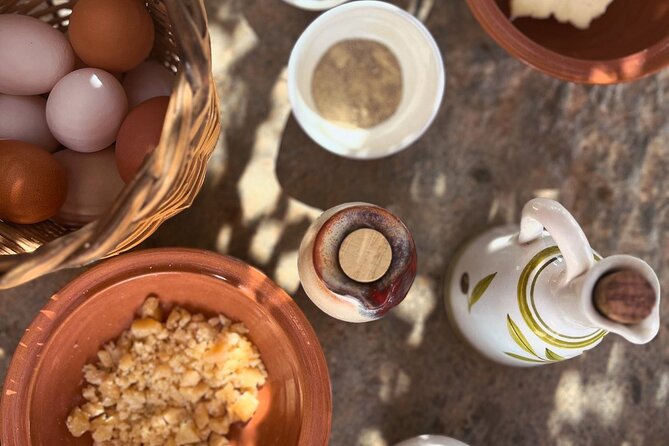
- Cook on a stone stove: You help grandma prepare and then you cook your portion like locals do.
- Farm access, not just a tasting room: You’ll visit a fresh olive grove plus a chicken house and goats.
- A museum tour tied to daily life: Exhibits cover rural Ios through the centuries, with real context for what you’re eating.
- A serious tasting spread: About 9 kinds of cheese, 2 honeys, fig marmalade, breadsticks, tomatoes with olive oil, and wine/liqueur with dry fruit.
- Small group vibe: Up to 8 travelers, which makes the questions and hands-on steps feel personal.
- You leave with what you made: Your cooked meal is packed in a special box for you to eat on the beach or later.
Diaseli Traditional Cheesery: where the day starts
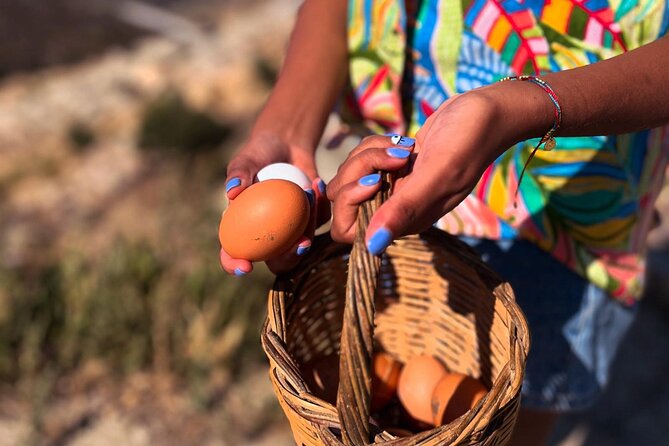
The morning begins at the Diaseli Traditional Cheesery & Museum in Ios, a working place tied to rural food traditions. The setting matters here. You’re not just sitting in a restaurant waiting for plates. You’re stepping into the kind of environment where cheese, honey, and olive-based ingredients are part of everyday life.
Starting at 9:00 am also helps. You avoid that late-day crunch when heat and crowds can make food tastings feel more rushed. And because this is a mobile ticket experience with a small cap of 8, you’ll generally move as a group without feeling swallowed by a bus tour.
You’ll likely start with the cheeseery and museum area, then flow outward toward farm spaces, and finally into tasting and cooking. That order is smart: you learn the “why” before the food hits full power.
You can also read our reviews of more tours and experiences in Ios.
Cooking a surprise local dish with Thia Froso (and a real process)
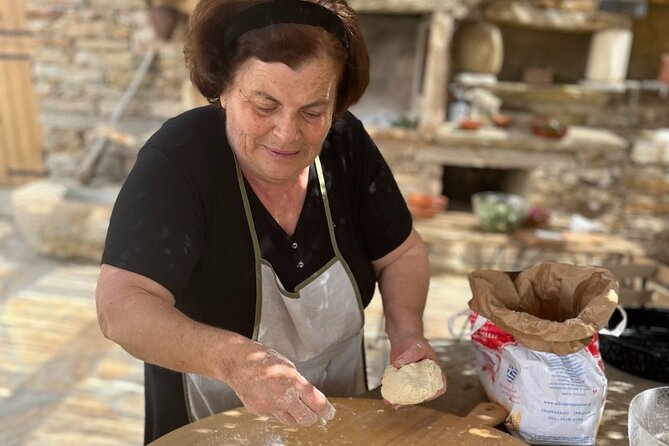
The centerpiece of this experience is the cooking work—hands-on, not a spectator show. The day includes a cooking demonstration of a surprise local dish led by Thia Froso, plus your turn at the stone stove. The experience is built around helping “our grandma” prepare a local recipe, then cooking it yourself in the same traditional way.
That “help grandma” part is more than a cute phrase. It usually means you’ll do practical steps—things like preparing ingredients, working at your station, and following instructions through cooking stages. You’ll get a feel for the rhythm of cooking on a stone stove, where timing and heat control matter, and where the food is treated as something made for the day, not manufactured for a single service.
You should also know this is a full morning, so plan to be present. The cooking portion is where you’ll get the most value from your curiosity: ask about ingredients, how the dish is shaped or finished, and what makes it “local” on Ios. The experience is structured so you’re not just handed food—you’re part of the making.
A possible drawback: if you’re very sensitive to getting your hands a bit busy (or you prefer watching only), you might have to mentally adjust. This is built around participation.
Visiting the olive grove and farm animals (why it matters for your meal)
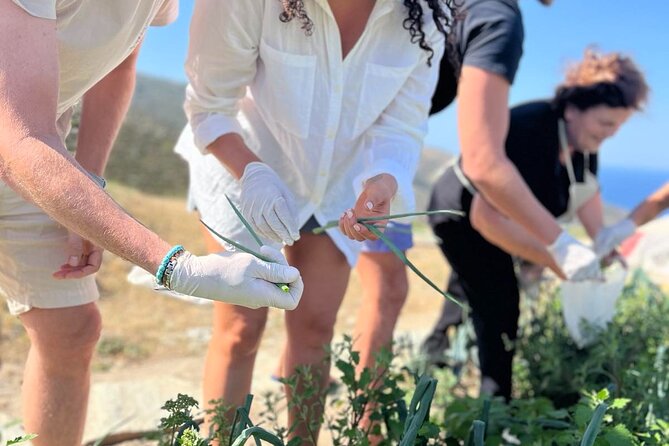
After you get the cooking foundation, the experience continues with rural farm stops. You’ll visit a new olive grove, then move on to a chicken house and goats. This matters because it turns the tasting menu into a story you can actually picture.
Olive groves connect directly to the kind of olive oil you’ll taste later with breadsticks and tomatoes. Seeing the trees and learning how the grounds are cared for helps the later flavors land better. Same idea with the farm animals: it reinforces that on Ios, food comes from a whole system—land, animals, seasons—rather than just a shelf label.
Also, this is one of those moments where you can slow down. Views can be amazing in places like this, and because the group is small, you’re not stuck behind a wall of people trying to take photos at the exact same time.
One caution: since the experience requires good weather, you’ll want to bring basic comfort for outdoor farm time—sun protection and water. If conditions are poor, the operator will adjust with an alternate date or a refund, but you’ll still want your plan to be flexible.
The museum tour: Ios rural life through the centuries
Next comes the museum and guided exhibits about rural life on Ios. This isn’t a generic “here’s an old artifact” setup. It’s specifically focused on daily rural living over time, and it ties into the food you’re doing that morning.
The practical value here is simple: when you learn how people lived, worked, and fed themselves, the meal becomes more than “tasty.” You start noticing connections—how ingredients match the island’s rhythms, how food choices reflect available resources, and why certain traditions stick around.
This part also helps pace the day. After active farm walking and cooking, the museum gives you a breather without turning the morning into dead time.
In a group of up to 8, this museum time can feel more like a conversation than a lecture. If you’re the type who likes questions, this is a good moment to ask how rural life changed as tourism and technology arrived.
Cheese tasting with ~9 cheeses, honey, and fig marmalade
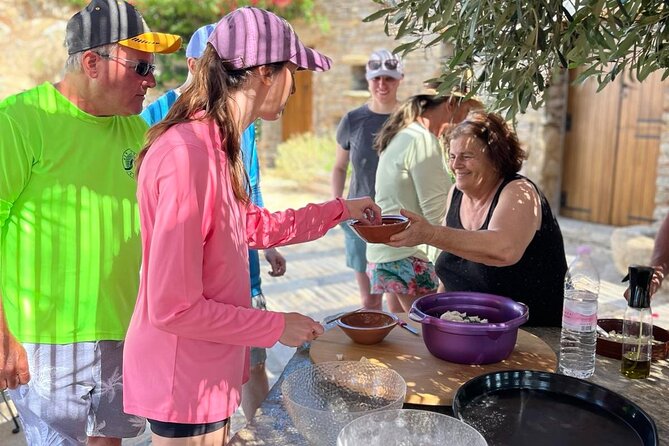
Now we get to the part many people come for: the cheese and sweetness lineup. You’ll enjoy a tasting featuring about 9 kinds of cheese, plus 2 types of honey, homemade fig marmalade, and breadsticks and tomatoes with olive oil from the olive trees.
Here’s how to get the most out of it. Taste with attention, not speed. Start by sampling one cheese, then notice what changes when you go to the next. If you move in a random order, the differences blur fast. A good trick is to pair your tasting with “why” questions: Is it softer or firmer? More salty or more tangy? Does the honey make it rounder? Does the fig marmalade add a deeper fruit sweetness that makes certain cheeses feel richer?
Wine and liqueur are part of this same tasting flow too, combined with dry fruit. That combination is useful: dry fruit adds chew and sweetness, while wine and liqueur can bring acidity and warmth. Together, they help you keep tasting without getting stuck in one flavor mood.
Also, since you cooked earlier, you’ll notice contrast. Your dish has its own shape and salt profile. Then the tasting becomes a second chapter—cheese and honey as the “dairy and sweet” arc—so the morning doesn’t feel repetitive.
What you eat and drink, and how much food is actually included
This experience includes snacks as part of the package, and the food portion continues through the cooking and tasting. The tasting spread is clearly more than a small plate: you’re looking at about 9 cheese varieties, two honeys, fig marmalade, plus breadsticks and tomatoes with olive oil.
You’ll also have wine and liqueur included, served alongside dry fruit. In other words, this isn’t just a cheese platter. It’s closer to a full guided food experience, where the variety is the point.
Timing-wise, the total duration is around 2 hours 30 minutes. That’s a sweet spot: long enough to cook, walk, learn, and taste, but short enough to still have a proper beach afternoon afterward.
One practical note: the meal you cook is packed for you in a special box to eat on the beach or later. That’s great if you want to turn the day into an easy lunch plan without finding food immediately after.
Value check: $154.88 for a small-group, multi-stop food day
At $154.88 per person, this is not a budget-only activity. But here’s the value logic that makes it more reasonable than it sounds.
You’re paying for a bundle of experiences that usually cost extra when separated:
- real hands-on cooking on a stone stove
- ingredient handling during a guided day
- farm-area visits (olive grove, chicken house, goats)
- a guided museum tour with rural-life exhibits
- a large tasting with roughly 9 cheeses plus honey, fig marmalade, olive oil pairings, and alcohol (wine and liqueur)
Then add the group size: up to 8 people. Small groups usually mean more attention, and here that matters because you’re cooking and tasting with guidance.
Also, it’s scheduled as a 9:00 am morning event, so you’re getting a full plan for the day’s first half. If you want an authentic food experience that also teaches you something about rural Ios, the price starts to feel like paying for access—access to a working cheesery environment and to people who can explain what you’re eating.
One caution on value: if you only care about tasting and you hate hands-on work, you may feel you’re paying for the cooking portion. If cooking on a stove and building understanding of rural food traditions sounds like your thing, it’s easier to see the cost as fair.
Booking demand is strong—on average it’s booked about 65 days in advance—so if you have fixed travel dates, don’t wait until the last week.
Logistics that affect your comfort (quick and practical)
This starts at 9:00 am and ends back at the meeting point, Diaseli Traditional Cheesery & Museum. It’s offered in English and uses a mobile ticket.
You don’t need snorkeling equipment for this specific experience. The listing notes snorkeling equipment is not included, so you can plan without it.
Because it runs outdoors in parts and requires good weather, keep your day flexible. If weather forces a change, you’ll be offered another date or a full refund.
Finally, the group is small, and the experience has a maximum of 8 travelers, which is part of why it feels personal instead of assembly-line.
Who should book this Ios cooking and cheese tasting?
I think this one fits best if you want:
- authentic food with real local work (not a staged cooking class)
- a mix of farm-life learning and serious tasting
- a morning plan that doesn’t require extra reservations afterward
- small-group attention while you cook and taste
It’s also a good choice for food lovers who like structure. You’ll have a guided path: cook, see the farm pieces, learn at the museum, then taste in a meaningful order.
If you’re traveling solo, you’ll still get interaction because the group stays small. If you’re traveling as a couple, it can be a fun shared activity with lots to talk about afterward.
If you’re very time-limited, note the whole thing takes about 2.5 hours—not a quick snack stop.
Should you book it?
Yes, if you want an Ios morning that mixes hands-on cooking with a genuinely local food tasting. The combination of stone-stove cooking, farm visits (olive grove, chickens, goats), and the museum tour makes it more than a single-theme experience. You’ll eat well, learn while you eat, and still leave with a meal packed for later.
I’d skip or rethink it if you only want a passive food tasting, or if your schedule can’t handle possible weather-related rescheduling. Otherwise, this is a strong pick for travelers who like their vacation experiences practical, authentic, and tied to how real islanders live and feed themselves.
FAQ
How long is the Ios cooking experience?
It’s about 2 hours 30 minutes.
What time does it start?
The start time is 9:00 am.
Where does it meet?
You meet at Diaseli Traditional Cheesery & Museum (Diaseli Traditional Cheesery & MuseumΔιασέλια Διασταύρωση Ψάθης- Μαγγαναριού Ίος, Κυκλάδες, Ios 840 01, Greece).
How many people are in the group?
The maximum group size is 8 travelers.
Is the experience offered in English?
Yes, it’s offered in English.
What food and drink are included?
You’ll have snacks, you cook and eat the meal you make, and there’s a cheese tasting with about 9 kinds of cheese. It also includes 2 types of honey, homemade fig marmalade, wine and liqueur with dry fruit, and breadsticks and tomatoes with olive oil.
Is snorkeling equipment included?
No, snorkeling equipment is not included.
What’s the cancellation policy?
Cancellation is free up to 24 hours before the experience starts. If you cancel less than 24 hours before, the amount paid isn’t refunded. The experience also depends on good weather. If canceled due to poor weather, you’ll be offered another date or a full refund.