REVIEW · AMSTERDAM
Amsterdam Canal Cruise with Cheese and Wine
Book on Viator →Operated by Voyage Amsterdam · Bookable on Viator
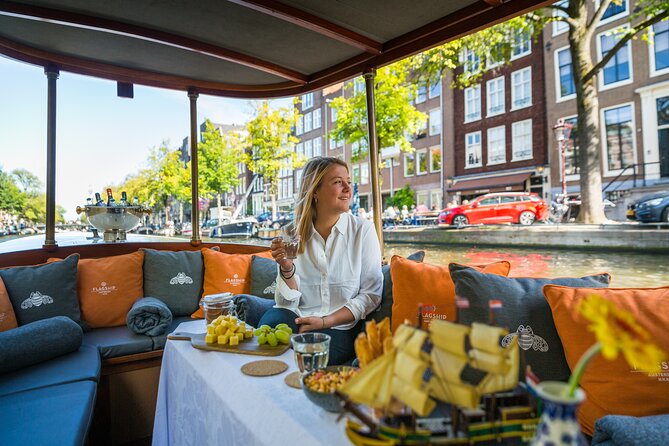
Cheese and wine on a canal boat sounds perfect. This 1-hour Amsterdam canal cruise with cheese and wine mixes live storytelling with snack-and-sip time on a traditional wooden boat. I love the live guide who keeps it interactive (you can ask questions) and the fact you can pick from two departure points. One thing to keep in mind: the food can feel more like a solid snack than a high-end tasting, and the “exact” sightseeing range can vary on the day.
For a first visit to Amsterdam, it’s a smart setup: you get orienting canal views without committing a whole afternoon. On the host side, different energy levels show up—when guides like Dean and Kevin are on, the hour flies; when the mood turns more social, you’ll want to keep asking questions to steer the talk toward the sites you care about.
In This Review
- Key Things to Know Before You Board
- Why This 1-Hour Canal Cruise Feels Worth It
- Price, Value, and What You Really Get
- Meeting Up, Seating, and How to Avoid the Usual Headaches
- The Jordaan Start: Prinsengracht, Negen Straatjes, and the Stories Behind the Names
- Amstel Highlights and the Blue Bridge Moment
- UNESCO Canal Belt Views: Herengracht, Keizersgracht, and Prinsengracht
- Singel and Moat-Era Amsterdam
- Skinny Bridge and Magere Brug: The Most Loved Photo Spot
- Munttoren and the Flower Market: Two Different Senses of Amsterdam
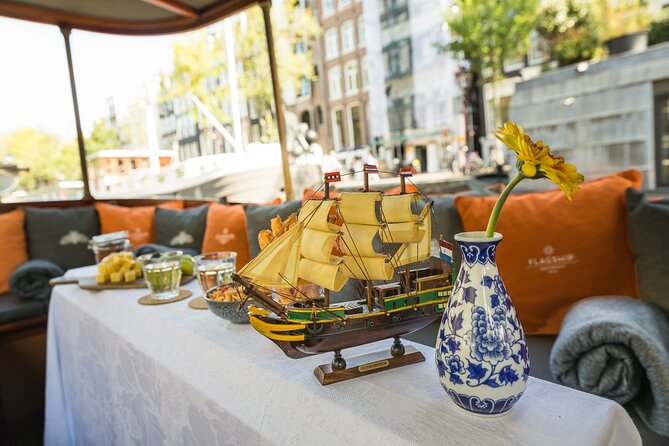
- Cheese and Wine During the Ride: Snack Pairing, Not a Full Tasting Flight
- Guides: Humor Helps, but You Control Your Experience
- Timing Advice: Daylight vs Night, and Why Busy Days Matter
- Should You Book This Amsterdam Cheese and Wine Canal Cruise?
- FAQ
- How long is the Amsterdam canal cruise?
- Is the tour offered in English?
- Does the tour include cheese and wine?
- Where does it sail?
- Do I need to print anything?
- What happens if the weather is bad?
Key Things to Know Before You Board
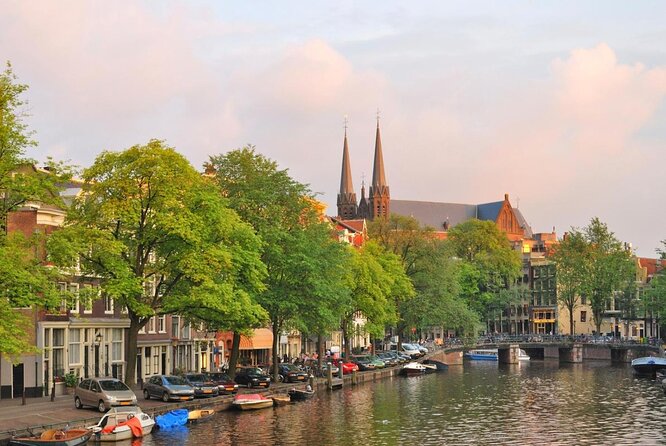
- You’re on a traditional wooden boat with a small max load, so the ride stays personal.
- Live English commentary with Q&A helps you turn what you see into real context fast.
- The “quick and complete” format is ideal when you have one short block to spend.
- Cheese and wine are part of the experience, but it’s pairing-style, not a gourmet tasting flight.
- Route coverage can be hit-or-miss for very specific landmarks, so go for the canal views first.
- Timing matters for comfort and scenery—busy days can make the pickup chaotic and the vibe less relaxed.
Why This 1-Hour Canal Cruise Feels Worth It
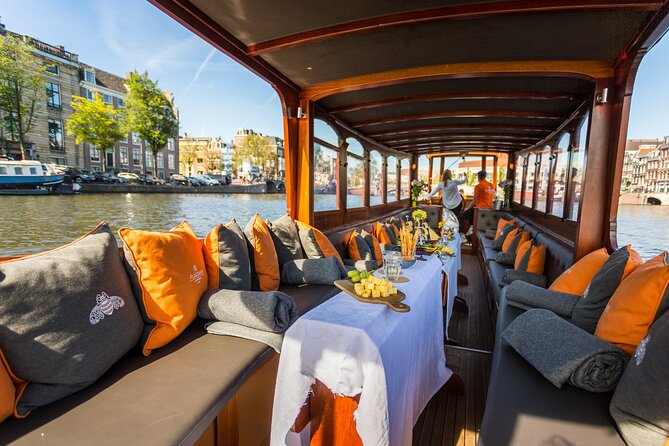
Amsterdam’s canals can be a lot. Street names, canal names, bridge names, and all those stories pile up fast. This cruise is designed to cut through that noise. In about an hour, you get a guided loop that frames the city’s layout and gives you a handle on what you’re actually looking at.
Then you add the practical magic: wine and cheese turn a sit-and-stare activity into something you can enjoy without rushing. Even if you’re not a big wine person, the tour usually keeps drinks flowing in the same time window as the sightseeing. And for many people, that’s the whole point—see, sip, relax, repeat.
You can also read our reviews of more tours and experiences in Amsterdam.
- Zaanse Schans Windmills, Clogs and Dutch Cheese Small-Group Tour from Amsterdam
★ 4.5 · 2,369 reviews

Price, Value, and What You Really Get
At about $43.39 per person for roughly an hour, you’re paying for three things at once:
1) a small-boat canal ride,
2) live narration in English, and
3) cheese plus wine (with some options that include beer or non-alcoholic drinks, depending on what’s being served that trip).
Value is strongest if you want a quick orientation. If you’re chasing a deep museum-like history lesson, you may find the hour too short—this is a pace that mixes facts with personality. If you’re expecting a wide-ranging cheese tasting board with multiple cheeses and detailed cheese storytelling, adjust your expectations. Some people get more basic servings (for example cubed gouda and a smaller assortment), even though others describe it as plentiful and enjoyable.
My practical take: book it if you want a pleasant intro to Amsterdam’s canal belt while you snack. If your top priority is a strict, academic “see every major landmark” itinerary, you may feel under-satisfied.
Meeting Up, Seating, and How to Avoid the Usual Headaches
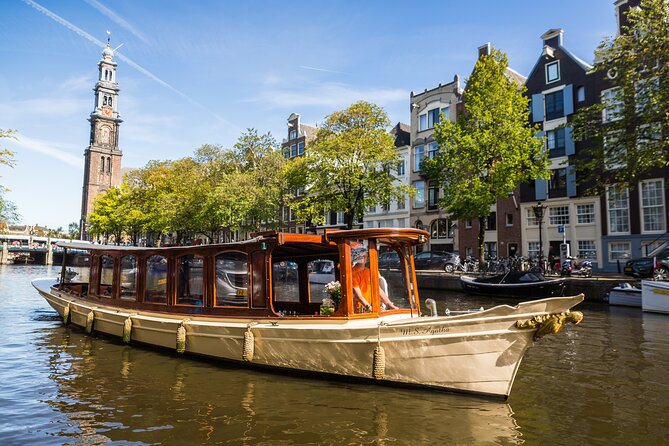
This tour runs with a mobile ticket, and it’s offered in English, with multiple departures and two departure points. That flexibility is good—so long as you show up at the right place and time.
Here’s what helps most:
- Arrive early for seating. People who sat where they could see clearly from the boat tended to rate the experience higher.
- Know your departure point. If there are two pickup options, double-check the one linked to your booked time.
- Plan for the day-of vibe. On busier days (for example, when downtown feels packed), the pickup area can feel messy or congested, and that can drain your mood before the boat even leaves.
As for the boat itself: it’s small enough that you don’t feel like a number. But it’s also not private. If you’re sensitive to crowds or prefer quiet, choose your time slot with care.
The Jordaan Start: Prinsengracht, Negen Straatjes, and the Stories Behind the Names
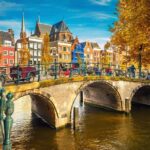
The cruise often centers on the Jordaan area and sails along Prinsengracht. This is where Amsterdam’s canal personality shows up—tight streets, canal houses, and the kind of geometry that makes you stop and stare without meaning to.
You’ll hear background that turns “just a canal” into something memorable. For example, the narration includes the origin theories behind the name Prinsengracht—one tied to Jardin (garden), another linked to the idea that the canal area was once nicknamed after the Jordaan / Dutch name connected to the river Jordan. It’s a small detail, but it helps you read the neighborhood like a map instead of a blur.
Then comes a very “Amsterdam” combo: canals plus people-watching. Along the route you may pass areas near:
- the houseboat museum on Prinsengracht, where the canal life vibe feels real
- the Negen Straatjes area, known for its shop-studded canal-side streets
One big advantage of this format is that you get both the view and the context without needing a guidebook in your lap. You’ll look at a row of houses and now you’ll know the name of the canal and why it matters.
Amstel Highlights and the Blue Bridge Moment
Amsterdam’s founding story keeps coming back to water. You’ll hear how the city developed from the Amstel—including the idea of fishermen building a “dam” and the emergence of Amsterdam around that spot.
Then the route moves through the kind of landmark stretch that’s perfect for photos, especially around the Blauwbrug (Blue Bridge). This bridge links the Rembrandtplein area with Waterlooplein and sits south of the Stopera. If you like bridges (and most first-time visitors do), this is a good “landmark check” in the middle of your hour.
This part of the cruise is also where the guide’s pacing matters most. When the host is quick and clear, you’ll walk away understanding not just what you saw, but why that crossing point matters.


UNESCO Canal Belt Views: Herengracht, Keizersgracht, and Prinsengracht
Amsterdam didn’t become Amsterdam by accident. The 17th-century canal belt—the Grachtengordel—forms concentric rings around the city and was listed as a UNESCO World Heritage Site. The main canals named in the narration are Herengracht, Prinsengracht, and Keizersgracht, with about 1,550 monumental buildings along the way.
On a short cruise, this is the part that helps you “get” Amsterdam quickly:
- The city isn’t random streets and canals. It’s planned geometry layered over time.
- The canal belt concept becomes a framework you can recognize later when you walk.
If you’re the type who likes to understand how a place is built, this UNESCO framing makes the hour feel more than entertainment. It’s still light-touch, but it gives your eyes something to latch onto.
Singel and Moat-Era Amsterdam
Another stop in the narration is the Singel, a canal that once encircled the city as a moat until the late 1500s. It now forms the innermost part of Amsterdam’s semicircular canal rings, running from the IJ bay area near Central Station to Muntplein, where it meets the Amstel.
Even if you don’t memorize dates, this concept is useful. It reframes your walk through central Amsterdam: you’re not just strolling through pretty streets, you’re moving through layers of protection, expansion, and redesign.
Skinny Bridge and Magere Brug: The Most Loved Photo Spot
If there’s one canal-bridge view that seems to belong on every Amsterdam itinerary, it’s the Magere Brug, also called the Skinny Bridge. The narration explains that it’s a wooden drawbridge and that the earlier version was narrow enough to make passing difficult for pedestrians. A wider bridge replaced the original in 1871.
This is a great moment because it’s both specific and iconic. It’s easy to point at in photos and easy to remember later. And because it’s a drawbridge over the Amstel, it’s a reminder that Amsterdam’s waterways weren’t just decoration—they functioned as transport and infrastructure.
Munttoren and the Flower Market: Two Different Senses of Amsterdam
Two very different kinds of stops tend to land well in the hour.
First, the Munttoren (mint tower). It was part of the Regulierspoort city gate system—built between 1480 and 1487. In the 1600s, the tower was used to mint coins. If you like the “money and power” side of history, this detail gives you a new angle on a city that often gets described only through art and canals.
Second, the Amsterdam Flower Market. This is the only floating flower market in the world and has operated since 1862. The stalls sit on houseboats, which keeps it in the same water-and-street reality as the rest of Amsterdam, not something stuck on the side.
If you’re visiting out of season, this part can still feel magical because it’s tied to a tradition, not just a single week of bloom.
Cheese and Wine During the Ride: Snack Pairing, Not a Full Tasting Flight
This cruise is named for cheese and wine, so let’s be honest about what that usually means in practice.
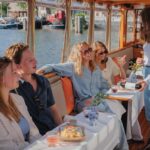
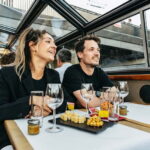
Most descriptions align with a platter-style serving: cubes of cheese (often including gouda), plus a small selection of wine choices. Some departures also include beer or soda and sometimes alcohol-free options, which is a nice touch if you’re traveling with mixed preferences.
But quality and variety are where expectations can clash:
- Some people think it feels basic or repetitive, like a simple board rather than a curated tasting.
- Others are thrilled because the wine stays coming and the cheeses are tasty enough to make the ride feel festive.
My advice: treat the cheese and wine as a friendly pairing that makes the canal time more fun. If you’re a serious foodie chasing a full flavor tour, plan a proper cheese shop stop separately on land.
Guides: Humor Helps, but You Control Your Experience
The vibe depends on the host style. Some guides lean into humor and keep the tone lively. Names like Dean, Kevin, and Sam have been associated with guides who are funny and attentive. Others have been described as more focused on social chatter than deep site history.
Here’s how to make the hour work for you, no matter who’s leading:
- Ask one good question early about what you’re seeing (a canal name, a bridge story, why the canal belt was built).
- If refills or pacing slow down, ask directly once rather than repeatedly interrupting.
- If you care about specific features like bridge facts or building-era details, steer the conversation that direction.
This is also why I like the interactive format: even when the humor is heavy, you still have a chance to get answers.
Timing Advice: Daylight vs Night, and Why Busy Days Matter
The cruise needs good weather, and if conditions are bad you’ll be offered another date or a full refund. For clear views and easy photos, aim for daylight when possible.
Night cruises can be hit or miss. If you’re expecting a “wow” evening with dramatic canal lighting, one experience found the night vibe less exciting. Daytime gives you more visual material to work with.
Also, watch the calendar for days when Amsterdam feels extra packed. One common problem is that the pickup area and surrounding area can get chaotic during high-traffic periods, and that affects mood fast.
Should You Book This Amsterdam Cheese and Wine Canal Cruise?
Book it if:
- you want a fast, fun intro to Amsterdam’s canals
- you like tours where the guide talks live and you can ask questions
- you want snacks and drinks without planning a full evening meal
Skip it (or be cautious) if:
- you’re chasing a deep, site-by-site history lesson in just one hour
- your cheese dream is a detailed tasting flight with many varieties explained like a seminar
- you’re very strict about seeing specific landmarks from the water, every time
My honest recommendation: for most first-timers and time-crunched couples or friends, this is a solid value because it does three jobs at once—orientation, entertainment, and a nice little pairing. It’s the kind of trip you use to fall in love with the city’s layout, then explore the rest on foot.
FAQ
How long is the Amsterdam canal cruise?
The cruise lasts about 1 hour.
Is the tour offered in English?
Yes, it includes live guided commentary in English.
Does the tour include cheese and wine?
Yes, it includes cheese and wine as part of the experience, served along with the cruise.
Where does it sail?
It sails along Amsterdam’s canals, including Prinsengracht and the Amstel, with narration covering multiple canal and landmark areas.
Do I need to print anything?
No. You can use a mobile ticket.
What happens if the weather is bad?
This experience requires good weather. If it’s canceled due to poor weather, you’ll be offered a different date or a full refund.
You Might Also Enjoy

More Tour Reviews in Amsterdam
- Zaanse Schans Windmills, Clogs and Dutch Cheese Small-Group Tour from Amsterdam
★ 4.5 · 2,369 reviews