REVIEW · PARIS
Paris Wine with Cheese Pairing & Tasting Small Group Class
Book on Viator →Operated by Le Foodist · Bookable on Viator
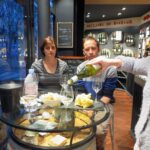
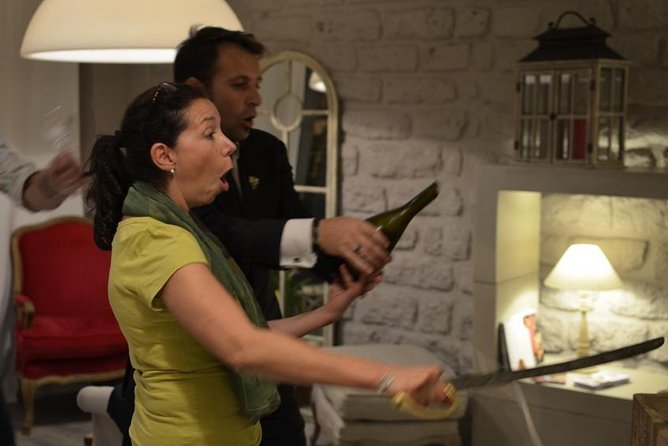
Saber a Champagne bottle in Paris. I love how this small-group class turns a simple tasting into real know-how, led by a sommelier in the middle of the city. You’ll sample four French wines from different regions plus Champagne, then learn how to taste and pair like a pro while you work through France’s main cheese families.
Two things I especially like: the energy—there’s laughter and real explanation, not just pouring—and the practical pairing focus, with bread, olives, and sliced ham along for the ride. One drawback to keep in mind: it’s only about 2 hours, so if you want to slow down and linger, you’ll need to take notes fast and be ready to taste at a steady pace.
In This Review
- Key points I’d plan around
- Meeting Le Foodist in the Latin Quarter (and why location matters)
- What you actually taste: four French wines plus Champagne
- Cheese families in plain language: tasting without guessing
- Pairing the class: how bread and ham sharpen the lesson
- Champagne sabering: the fun part with a real point
- Small-group size and the instructor dynamic (why you’ll get answers)
- Is the price ($113.49) good value for Paris?
- Best for who (and who should skip it)
- Quick practical checklist before you go
- Should you book Paris Wine with Cheese Pairing & Tasting?
- FAQ
- Where does the class meet?
- What time does the experience start?
- How long is the class?
- How many wines are included?
- What food is included with the tasting?
- Is it a small group?
- What’s the minimum drinking age?
- Do you get any kind of takeaway for pouring?
- If I cancel, do I get a refund?
Key points I’d plan around
- Central meeting point at Le Foodist (59 Rue du Cardinal Lemoine, 75005), a handy stop for the Left Bank
- Four regional French wines plus one Champagne so you can compare styles, not just sip blindly
- Five major French cheese families taught with an actual tasting flow, not a random cheese plate
- Champagne sabering practice plus a real pour tool: you receive a Drop-Stop
- Group size capped at 16, which keeps questions from getting buried
Meeting Le Foodist in the Latin Quarter (and why location matters)
This class meets at Le Foodist, 59 Rue du Cardinal Lemoine in Paris (5th arrondissement). It’s a smart neighborhood base because you can often combine it with an easy day around the Left Bank. One review noted it’s about a short walk from the Panthéon area and not too far from Notre-Dame, which means you’re not stuck in a far-flung suburb with only one thing to do.
You start at 12:00 pm, and the experience runs about 2 hours. That timing matters. If you usually eat a big lunch, go lighter before class so tasting doesn’t feel like a sprint. If you tend to skip meals, have a small snack first—there’s no mention of a full meal, and you’ll be drinking multiple samples.
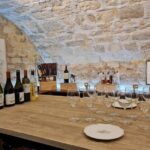
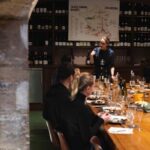
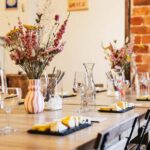
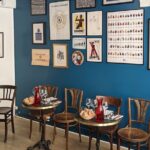
The venue is set up for hands-on learning. You’re not just sitting in a lecture room with paper napkins. You’ll be tasting, comparing, and getting guidance while you go.
You can also read our reviews of more tours and experiences in Paris.
What you actually taste: four French wines plus Champagne
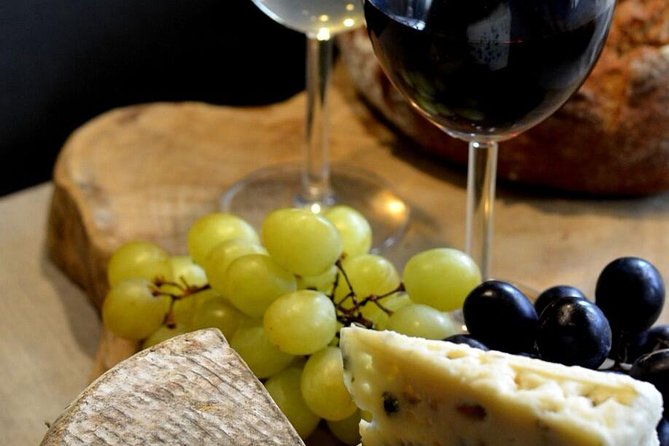
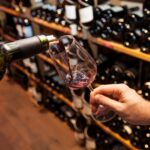
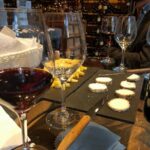
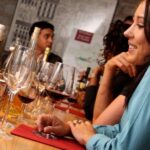
The heart of the class is the tasting lineup: four wines from different regions across France, plus one Champagne. That structure is the point. Instead of one “good wine,” you’re taught to look for differences—how region shapes flavor.
Your sommelier host explains the geographical and historical origins of what you’re drinking. You’ll also hear about terroir, the French idea that soil, climate, and growing conditions influence what ends up in the glass. You don’t need to memorize a textbook definition. What matters is that you learn how to notice how those factors show up as aromas, texture, and flavor.
In past sessions at Le Foodist, the instructor has been Stéphane, and the reviews describe him as charming and funny while teaching. That matters for first-timers. Wine can feel intimidating. When the guide keeps it light and clear, you can actually absorb what you’re tasting instead of getting stuck trying to sound like you belong.
Cheese families in plain language: tasting without guessing
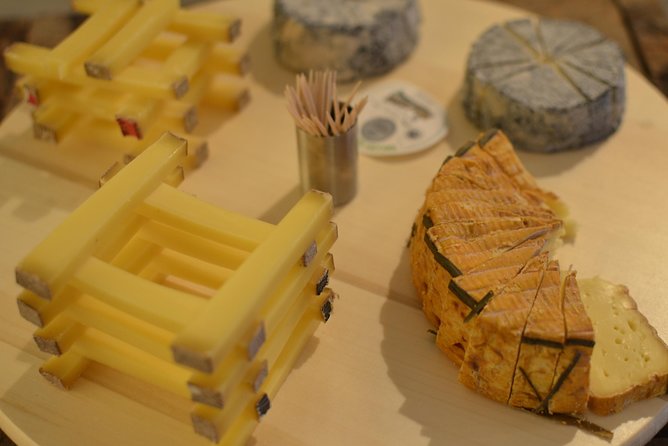
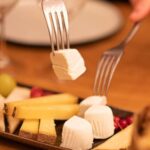
After the wine portion, you move into cheese learning—centered on five major French cheese families. The value here isn’t that you’ll eat a lot of cheese. The value is that you’ll understand how each family tends to behave: how it tastes, how it smells, and what changes when you pair it with different wines.
Cheese families can sound abstract. This class keeps it concrete by pairing each tasting moment with explanation and then letting you taste the difference. You get to experience subtleties yourself, which is the quickest way to stop guessing and start recognizing patterns.
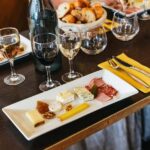
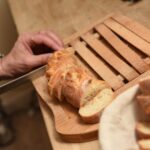
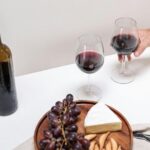
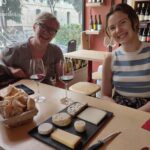
You’ll also eat the “supporting cast” with your tastings. Expect bread, olives, and sliced ham alongside the cheeses. Those items do more than fill plates. They change how the flavors land in your mouth, and they show you why French pairings often aren’t just wine + cheese in a vacuum.
If you’re the type who thinks you like cheese but can’t say why, this is the kind of class that helps you put words to your taste. You’ll leave knowing what you liked and what made it work, not just that everything was good.
Pairing the class: how bread and ham sharpen the lesson
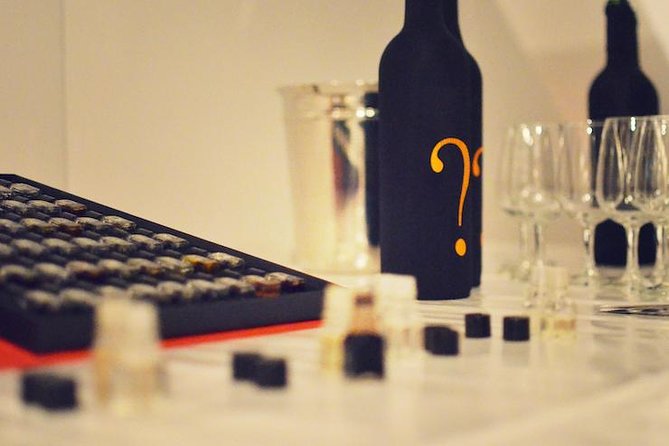
A lot of wine-and-cheese experiences treat pairing like a magic trick: pour, eat, smile. This one builds pairing step-by-step. Your guide has you taste so you can notice how the wine and cheese interact—how flavors can amplify each other, or how one can calm the other down.
The snacks included—bread, olives, and sliced ham—aren’t random. They’re there for balance and contrast. Bread is great for resetting your palate between tastes. Olives bring salty, briny edge that helps you understand what a wine does when it meets salt and fat. Ham adds a familiar, savory element that makes the overall pairing feel more like what you’d actually eat in France.
I also like that the class doesn’t force you into an all-day sommelier mindset. It gives you structure and then lets you connect the dots through repeated tasting.
Champagne sabering: the fun part with a real point
You’ll learn a showy skill in a very practical way: saber a Champagne bottle. The class includes instruction on opening a Champagne bottle with a saber method—then you’ll share a glass with your classmates.
This isn’t just for spectacle. It’s a good reminder that Champagne culture in France comes with rituals. When you understand the ritual, it’s easier to appreciate the wine itself—bubbles, acidity, and how the tasting experience is meant to feel celebratory.
The reviews specifically mention the sabering moment as a highlight, with one person noting they got to pop open a Champagne bottle. Even if you don’t use the technique exactly as described in every detail, the lesson is clear: Champagne isn’t treated like a casual drink. It’s part of French dining culture, with its own way of being opened and shared.
And there’s a nice bonus at the end. You receive a Drop-Stop device, described as helping with the perfect pour every time. It’s the kind of small takeaway that can keep you practicing the experience at home—especially if you’re the sort of person who buys Champagne and then forgets what to do with it.

Small-group size and the instructor dynamic (why you’ll get answers)
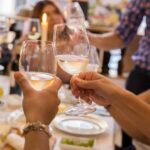
The class caps at 16 travelers, and that’s a sweet spot. Big enough that the room feels lively. Small enough that you can ask questions and get specific feedback.
In the reviews, the instructor style comes through clearly: the class is described as fun, educational, and full of laughter. That’s not just fluff. When people are comfortable, they ask better questions. And that’s when you get the most value from tasting lessons.
If you’re traveling with a partner or a small group and want one activity that’s social but not chaotic, this fits well. You’ll share the glasses, get paired explanations, and still have time to take in what’s happening.
Is the price ($113.49) good value for Paris?
At $113.49 per person, this isn’t the cheapest thing you can do in Paris. But it also isn’t just a snack tour with a wine pour at the end.
You’re paying for four things that normally cost more separately:
- A professional sommelier host guiding the tasting
- Five drinks total (four regional wines + Champagne)
- Multiple cheese families taught with a pairing framework
- Included food supports (bread, olives, and ham)
- A hands-on Champagne sabering moment and a small tool takeaway (Drop-Stop)
For me, the best justification is the “learning + tasting” combo. If you only want to eat and drink, you can find that anywhere. If you want to leave with a method—how to taste, how to pair, and what terroir means in real terms—then the price feels fair for a structured experience.
The only time I’d hesitate is if you’re extremely price-sensitive or you don’t drink wine or Champagne at all. This class is built around tasting and pairing, not around food alone.
Best for who (and who should skip it)
This class is a great fit if you’re:
- A food lover who wants an activity that’s both fun and educational
- New to wine or cheese and want clear guidance without judgment
- Traveling with friends or a partner and want a small-group plan
I’d think twice if you:
- Have a tight schedule where 2 hours feels too compressed
- Don’t enjoy wine-and-cheese pairings, since the class is centered on tasting
- Prefer a purely self-guided approach over instructor-led explanation
Also, the minimum drinking age is 18. If you’re traveling with anyone under that age, this experience won’t be appropriate for them.
Quick practical checklist before you go
Here’s how I’d prep so you get the most from your time:
- Eat something light beforehand, since you’ll be drinking multiple samples
- Bring curiosity, not credentials—this is designed for first-timers
- Plan to take short notes while you’re tasting (you’ll forget details fast)
- Wear something comfortable for a seated-and-standing activity in a small venue
Should you book Paris Wine with Cheese Pairing & Tasting?
I think you should book if you want one solid Paris experience that mixes culture with hands-on technique. The class gives you a reason to pay attention—four wines, multiple cheese families, and an actual pairing method—plus the standout Champagne sabering moment.
I’d skip it only if wine-and-cheese pairing doesn’t sound like your thing, or if you’re trying to squeeze in a perfect lunch without any time pressure. If you can show up ready to taste and learn, this is the kind of activity you can remember long after the last glass.
FAQ
Where does the class meet?
The class meets at Le Foodist, 59 Rue du Cardinal Lemoine, 75005 Paris, France.
What time does the experience start?
The start time is 12:00 pm.
How long is the class?
It runs for about 2 hours.
How many wines are included?
You’ll taste 4 wine samples from different regions across France plus 1 Champagne sample.
What food is included with the tasting?
You’ll get cheese, bread, olives, and ham as part of the pairings.
Is it a small group?
Yes. The experience has a maximum of 16 travelers.
What’s the minimum drinking age?
The minimum drinking age is 18.
Do you get any kind of takeaway for pouring?
Yes. At the end, you receive a Drop-Stop described as helping with the perfect pour every time.
If I cancel, do I get a refund?
You can cancel up to 6 days in advance for a full refund. Canceling closer than that reduces or removes the refund based on how many days before the start time you cancel.