REVIEW · PARIS
Paris: Wine and Cheese Lunch
Book on GetYourGuide →Operated by O Chateau - Paris Wine Tasting · Bookable on GetYourGuide
A good meal shouldn’t feel like homework. This Paris wine and cheese lunch turns lunch into a guided tasting, with Champagne and four other wine regions taught in plain, practical terms.
I really like two things here. First, the pairings make sense fast: you’re not just tasting, you’re learning why wine choices and cheese styles work together. Second, the location and format are easy: you get a focused 2-hour lunch near the Louvre, in a proper tasting room setup, without hunting for a restaurant.
One caution: this is a wine-first lunch. If you don’t drink much wine (or you’re bringing kids), it may feel like the wrong kind of break from sightseeing.
In This Review
- Key Highlights Worth Your Time
- Why This Paris Wine and Cheese Lunch Beats a Usual Restaurant Stop
- The Ô Chateau Setting: Where the Lunch Happens in the 1st
- The 2-Hour Flow: How the Tasting Works From Champagne to Cheese Pairings
- What to watch for on each pour
- What You Learn About French Wine (Without the Snob Stuff)
- The pairing lesson you’ll actually remember
- The Wine Regions Tour: Champagne, Bordeaux, the Loire, and Beaujolais
- Common grapes you may hear about (useful context)
- The Food Part: Five Artisanal Cheeses, Bread, and a Real Lunch Feel
- How cheese styles change the wine
- Optional upgrade: charcuterie platter
- The Sommelier: The Real Difference Between Tasting and Learning
- Buying Wine After: Bring a Bottle Home the Smart Way
- Price and Value: Is $100 Per Person Actually Fair?
- Who Should Book This Lunch (and Who Might Want a Different Plan)
- Final Call: Should You Book Ô Chateau’s Wine and Cheese Lunch?
- FAQ
- How long is the Paris Wine and Cheese Lunch?
- Where is the meeting point?
- How many wines and cheeses are included?
- Is the tour offered in English?
- Is still water included?
- Can I add charcuterie?
- Is it suitable for children?
- Is it suitable for pregnant women?
- What are the cancellation and pay-later options?
Key Highlights Worth Your Time
- Near the Louvre (1st arrondissement): a short hop from Line 1 and Line 4 metro stops.
- Five wines in total, including one Champagne, poured with thoughtful pairing logic.
- Artisanal cheese + bread in generous servings, not tiny “sample” plates.
- Learn how to read labels and spot French wine varieties while tasting.
- Sommelier-led pairings that explain what changes when wine meets salty, creamy, or firm cheese.
- Optional charcuterie add-on if you want to build the lunch.
Why This Paris Wine and Cheese Lunch Beats a Usual Restaurant Stop
Paris is great at making you choose between “see the sights” and “eat something good.” This lunch does both, because it’s timed, structured, and centered on two classic French products: wine and cheese.
What makes it work well for real life is the balance. You get enough instruction to build confidence, not so much that you feel locked in. And you get enough food to make it feel like an actual lunch, not a snack break. Several people call out that the pours and cheese portions are generous, which matters when you’re booking an afternoon activity.
There’s also a practical payoff. Once you understand the basic pairing reasons, you can walk into any French wine shop later and make better choices instead of guessing.
You can also read our reviews of more tours and experiences in Paris.

The Ô Chateau Setting: Where the Lunch Happens in the 1st
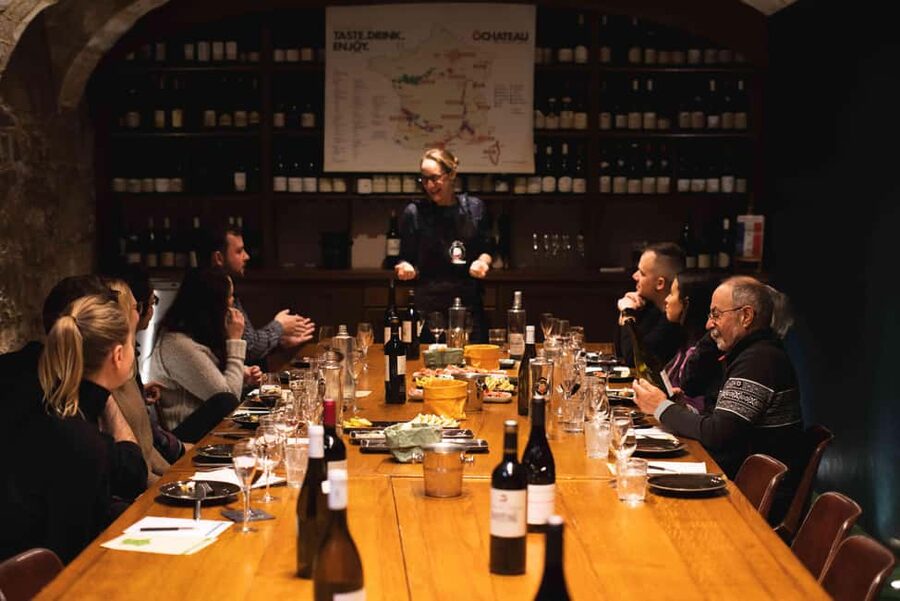
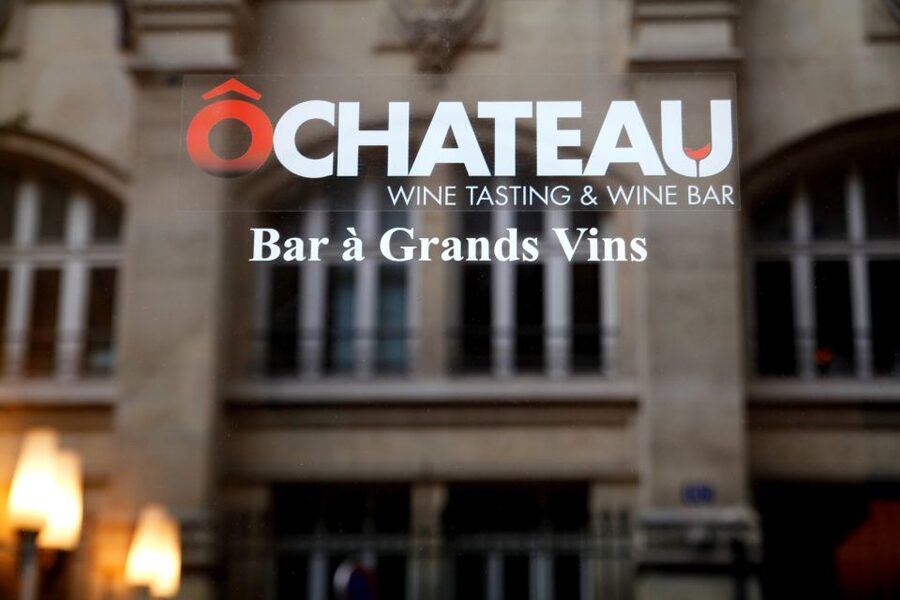
The meeting point is Ô Chateau at 68, rue Jean-Jacques Rousseau, 75001, about a 3-minute walk from the Louvre. That’s a big deal if you’re trying to keep your day efficient. You can do a morning or early afternoon of museum time, then drop into this tasting without spending another hour on transit.
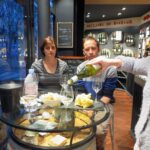
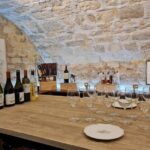
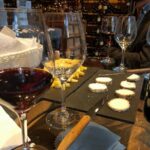
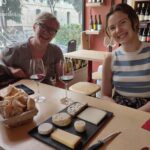
You’ll likely enter a tasting-room style space that works like a proper food-and-wine stop, not a loud restaurant rush. Reviews mention a wine-cellar vibe, which matches the theme: you’re tasting in the right mood, with your attention on the table.
If you’re using public transit, the nearest metro options are Louvre Rivoli (Line 1) and Etienne Marcel (Line 4). Lines like these are useful because they connect easily to a lot of central routes, meaning you won’t lose time zig-zagging across Paris.
The 2-Hour Flow: How the Tasting Works From Champagne to Cheese Pairings
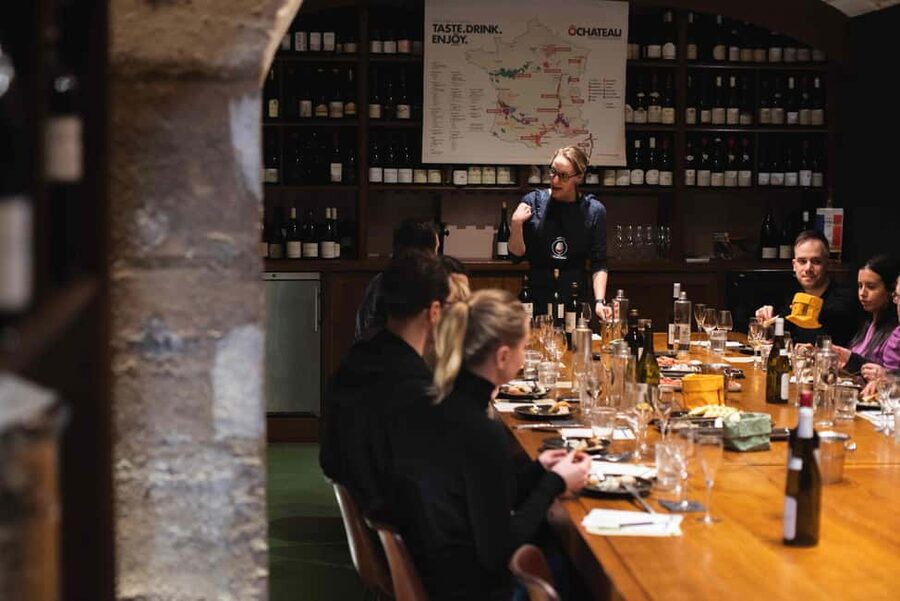
This runs for about 2 hours, and the rhythm stays simple: sit down, taste through the lineup, and learn as you go. Even with only two hours, the structure matters because it keeps you from doing the classic tasting mistake: taking sips without noticing what changed.
Here’s the typical progression you can expect from the way the lunch is described:
- Intro + tasting start: Your English-speaking sommelier sets the stage, then you begin with the first wine tasting.
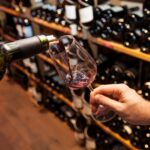
- Five wines total: You’ll sample five French wines, including one Champagne.
- Cheese arrives as the pairing partner: The sommelier suggests why a specific cheese works with a specific wine, and you taste those combinations back-to-back.
- Practical learning moments: You’ll learn how to identify French wine varieties, how to read a French wine label, and how Champagne is made.
- Q and A and time to enjoy: Reviews repeatedly highlight an atmosphere that mixes instruction with actual conversation.
From the guest feedback, the best part is how the pairing explanations feel like a cheat sheet you can use immediately. People describe it as fun and educational without turning it into a lecture.
What to watch for on each pour
As you taste, pay attention to a few changes you’ll be encouraged to notice:
- How bubbles from Champagne can reset your palate.
- How tannins in reds can feel different with firm or fatty cheeses.
- How acidity can make a cheese taste sharper or cleaner.
- How salty, nutty, or creamy cheeses shift the way you perceive fruit and spice in the wine.
You don’t need to be a wine expert to get value from this. You just need to be willing to try the pairing the way your sommelier recommends it.
What You Learn About French Wine (Without the Snob Stuff)
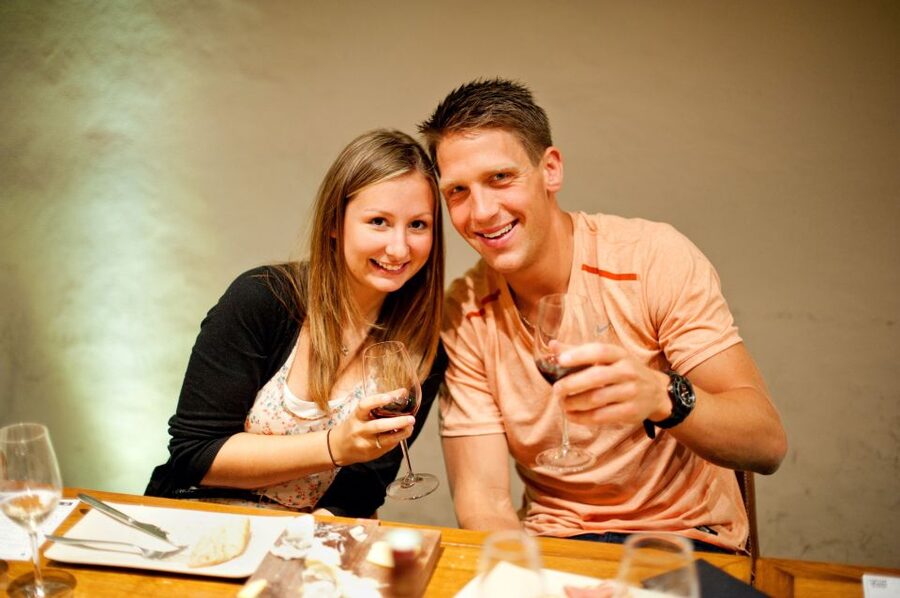
This lunch is built around teaching you the logic behind French wine choices. The program is described as focused on wine, but it keeps the goal practical: you’ll learn how to identify French wine varieties and how to read a French wine label.
Why that’s useful: most people stand in front of a shelf in France (or at home) and freeze. Labels can look like code. If you can spot the main grape and the region style, you can narrow your options quickly.
Also, Champagne gets special attention. Champagne is often treated like a party wine, but here you’ll learn how it’s made. That helps you taste Champagne more like a product with technique behind it, not just a bubbly drink.




The pairing lesson you’ll actually remember
The strongest theme in the feedback is the pairing logic. Several people mention that they learned a lot about how to match wine and cheese, and a few even note they were surprised by bottles they wouldn’t have chosen on their own—until the cheese showed them a different side of the wine.
That’s the real value. Pairing doesn’t just taste good. It teaches you what flavor components matter.
The Wine Regions Tour: Champagne, Bordeaux, the Loire, and Beaujolais
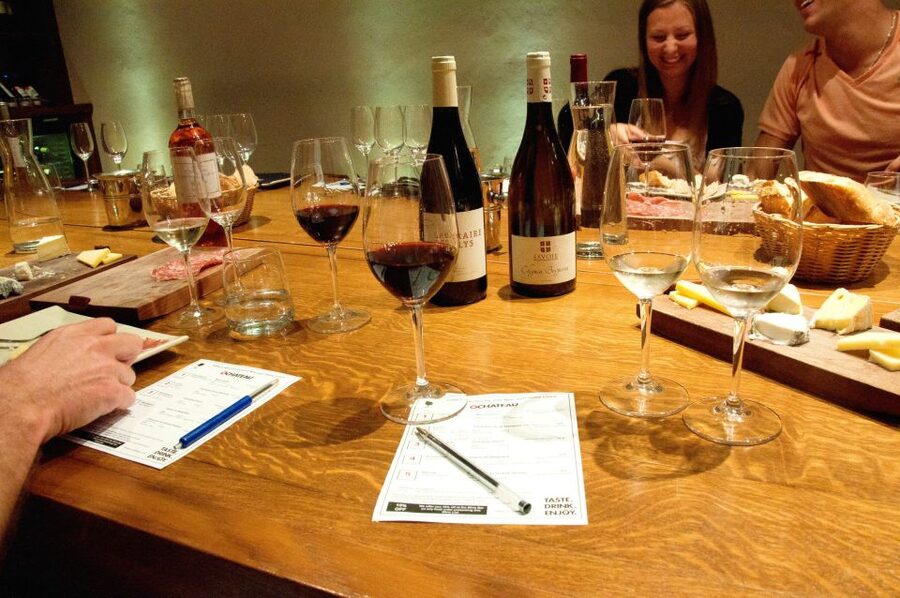
You taste wines from four different French regions, with Champagne included, and the lineup described spans Champagne, Bordeaux, the Loire, and Beaujolais.
You won’t just sample random bottles. The whole point is to learn what region signals taste-wise. In practical terms, here’s how to think about the differences as you go:
- Champagne: expect a focus on bubbles and freshness. It’s the kind of wine that often works with many cheese styles because the acidity and effervescence keep your palate lively.
- Bordeaux: often brings structured reds with noticeable tannins and deeper fruit or cedar-like notes, depending on the bottle.
- Loire: commonly leans brighter and aromatic, with white wines that can feel crisp and citrusy, plus reds that can taste more herbal or berry-driven.
- Beaujolais: usually feels fruit-forward and approachable, often pairing well with cheese because it can be lively without heavy heaviness.
Even if you don’t get every detail on the first try, the structure helps you start building an internal map: region signals style, and style signals pairing.
Common grapes you may hear about (useful context)
You’re explicitly set up to learn French wine varieties, so it helps to know what those region “families” usually include:
- Champagne often revolves around grapes like Chardonnay and Pinot Noir (and in many cases Pinot Meunier).
- Bordeaux commonly features Cabernet Sauvignon and Merlot.
- The Loire often includes Chenin Blanc and Sauvignon Blanc, plus Cabernet Franc in reds.
- Beaujolais is famously linked with Gamay.
Your sommelier may not spell it out exactly the same way for every bottle, but having the basic idea makes the label tips stick faster.
The Food Part: Five Artisanal Cheeses, Bread, and a Real Lunch Feel
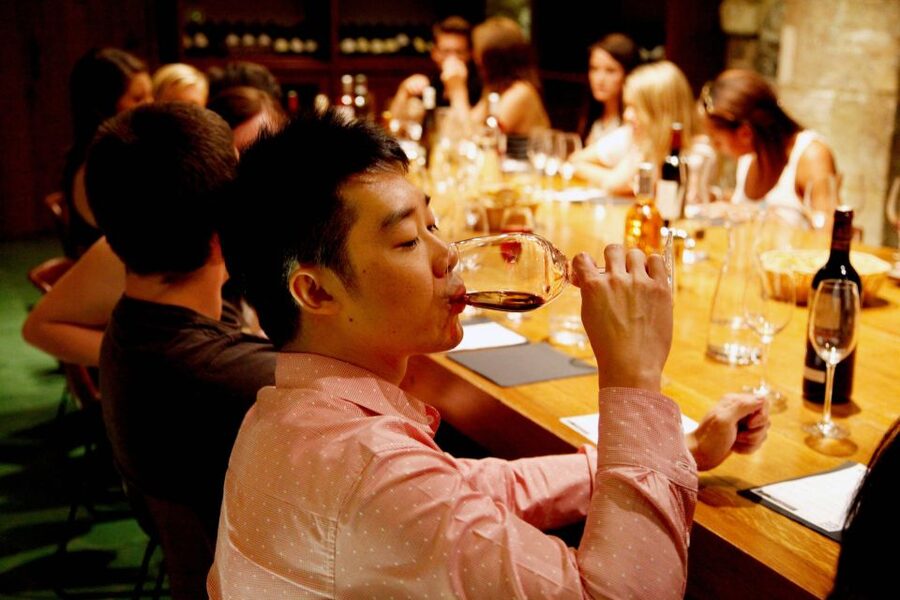
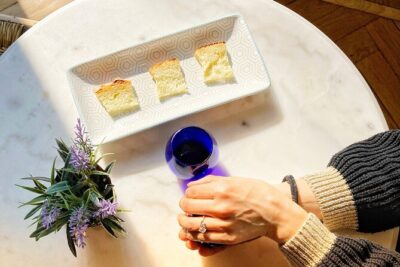
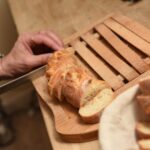
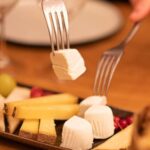
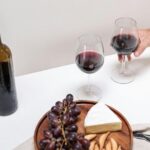
This isn’t just wine with a token cheese bite. You get a selection of 5 artisanal cheeses and bread baskets, plus still water.
And the portion tone is important. Multiple reviews highlight that cheese and pours are generous and satisfying. In other words, you’re not paying just for instruction; you’re paying for an actual lunch built around the tasting.
How cheese styles change the wine
To get the most out of the pairings, think about cheese texture and flavor intensity:
- Creamy cheeses can make wine feel rounder and softer.
- Firm aged cheeses often push you toward wines with better structure or acidity.
- Salty cheeses can make fruit notes pop while also challenging some reds with strong tannins.
That’s exactly the kind of cause-and-effect the sommelier is there to explain.
Optional upgrade: charcuterie platter
If you want a fuller spread, you can add a charcuterie platter for 15 €. This is a good option if you arrive hungry from sightseeing or if you’re the type who likes a mix of cheese and cured meats at lunch.
The Sommelier: The Real Difference Between Tasting and Learning
A tasting can be pleasant and still be forgettable. What you’re paying for here is the guide’s ability to turn wine-and-cheese into something you understand.
Across reviews, the names that come up most include Jasmina, Paul, Gerald, Willy, Rudy, and Felicity. You won’t control who you get, but the consistency of praise tells you the teaching style matters: people describe the hosts as friendly, engaging, and able to answer questions.
Practical tip: bring a notepad if you want to remember label cues. One review specifically suggests jotting down appellations and bottle notes, and that’s a smart move if you plan to buy later.
Buying Wine After: Bring a Bottle Home the Smart Way
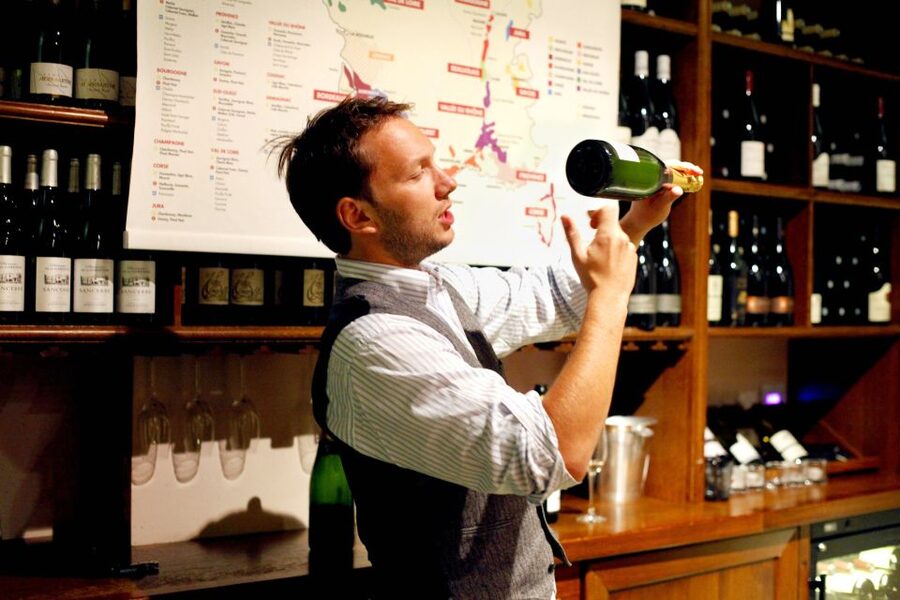
One of the nice parts of this format is that if you fall for a bottle during the tasting, you can purchase wines on the spot. The information provided says all the wines are available to buy, and a broader selection may be available as well.
This is a value add because you’re not guessing. You tasted the pairing, you liked the flavor, and you heard the pairing logic. That’s a clean path to buying a bottle you’ll enjoy at dinner back home.
Price and Value: Is $100 Per Person Actually Fair?
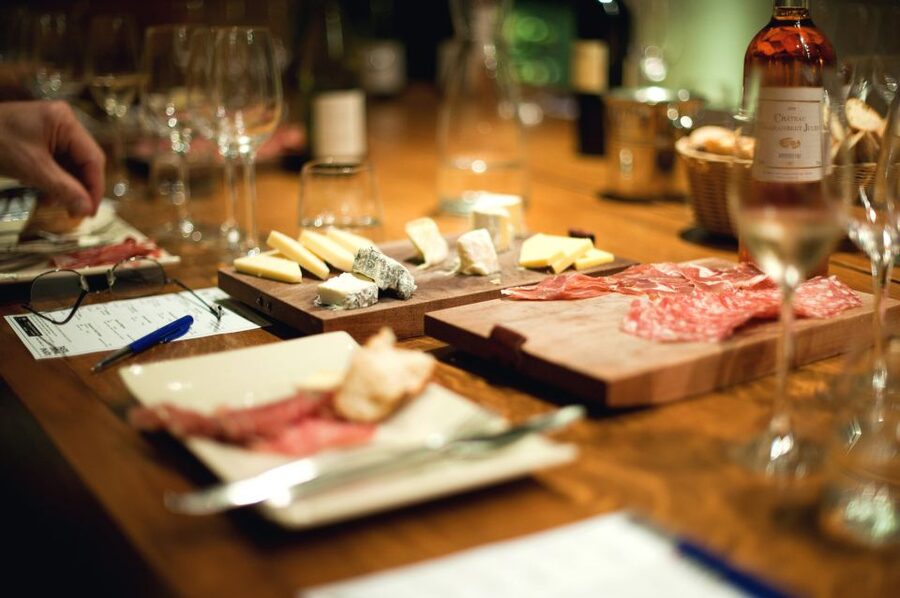
At $100 per person for 2 hours, you might wonder if it’s expensive. Here’s how I’d judge value for this specific type of lunch:
You’re paying for:
- Five wines, including Champagne
- Five artisanal cheeses plus bread
- Still water
- An English-speaking sommelier who explains pairing logic and label/variety basics
- A central Louvre-area location, so you’re saving time and energy on your afternoon
If you try to recreate the same thing on your own—buy Champagne, seek out five cheeses, line up a pairing plan, and find someone to teach you why—cost and hassle can add up fast. Even for people who already know wine, instruction plus pairing guidance tends to make the tasting more efficient. For people who don’t know wine much, the learning component can be worth a lot on its own.
So yes, it’s not a budget lunch. But it’s closer to a guided food-and-wine session than a casual meal, and the structure is built for that price.
Who Should Book This Lunch (and Who Might Want a Different Plan)
This activity is described as a fun, informative way to have lunch in Paris, and that shape fits certain people well.
You’ll likely enjoy it if you:
- Want a central, time-efficient activity near the Louvre
- Like learning through tasting instead of reading
- Enjoy cheese and want pairing ideas you can use later
- Want to try wines from regions like Bordeaux, the Loire, and Beaujolais without doing research first
You might want to skip it if:
- You don’t drink much wine, because the format is wine-focused
- You’re traveling with children under 10
- You’re pregnant, since it’s listed as not suitable for pregnant women
Also, an interesting note from the feedback: one person who normally favors beer still enjoyed the wines here. That suggests the teaching and the pairings can make wine feel less intimidating, even if wine isn’t your usual drink.
Final Call: Should You Book Ô Chateau’s Wine and Cheese Lunch?
I’d book it if you want one afternoon in Paris to feel like a real tasting lesson with a satisfying lunch outcome. The combination of five wines including Champagne, five artisanal cheeses, and an English-speaking sommelier who guides the pairing logic is exactly the kind of structured activity that pays off later when you shop for wine or order cheese again.
I’d think twice only if wine doesn’t interest you, or if you need a kid-friendly, low-alcohol style meal. For everyone else, this is one of those “do it once, and you’ll understand it forever” kinds of food experiences.
FAQ
How long is the Paris Wine and Cheese Lunch?
The duration is 2 hours.
Where is the meeting point?
Ô Chateau is at 68, rue Jean-Jacques Rousseau, 75001, Paris. It’s about 3 minutes from the Louvre Museum.
How many wines and cheeses are included?
You’ll taste five French wines (including one Champagne) and a selection of five artisanal cheeses, with bread baskets.
Is the tour offered in English?
Yes. The sommelier/instructor is listed as English-speaking.
Is still water included?
Yes, still water is included.
Can I add charcuterie?
Yes, you can add a charcuterie platter for 15 €.
Is it suitable for children?
It is not suitable for children under 10.
Is it suitable for pregnant women?
No. It’s listed as not suitable for pregnant women.
What are the cancellation and pay-later options?
You can cancel up to 24 hours in advance for a full refund. There is also a reserve now and pay later option (book your spot and pay nothing today).