REVIEW · PARIS
Wine & Cheese in Montmartre: A True Taste of France 6-ppl Max
Book on Viator →Operated by VOYAGE · Bookable on Viator
Montmartre can feel like a blur of hills and photos. This tour slows it down with a small-group walk and a wine-and-cheese tasting built right into the day. I especially like how you get a guided thread from the Moulin Rouge area all the way up to Sacré-Cœur, and how the route hits key corners like Place Dalida and Place du Tertre without wasting your time. The only real catch is the steps and small hills—it’s totally doable, but you’ll want comfortable shoes.
I also loved that the group is capped at just 6 people, so the guide can keep the pace personal and the stories actually land. If you’re allergic to certain foods or avoiding specific ingredients, you’ll need to say so in advance, because the tastings are not plant-based. For anyone who wants a guided “food + culture” walk instead of a solo scavenger hunt, this hits the sweet spot.
In This Review
- Key highlights worth your attention
- Montmartre, but with food as the through-line
- Why the 6-person cap changes everything
- From Blanche to Moulin Rouge: the show-business entry point
- Café des Deux Moulins and the Wall of Love: pop culture meets public art
- Le Bateau-Lavoir and Place Dalida: where artists and music shaped the hill
- The wine-and-cheese tasting stop: the real pay-off
- Place du Tertre: the artist square you can actually watch
- Sacré-Cœur on your schedule: self-guided finish with big views
- How the $147.74 price pencils out for what you actually get
- Who this tour suits best (and who may want to rethink)
- Should you book Wine & Cheese in Montmartre?
- FAQ
- How long is the wine and cheese tour in Montmartre?
- What group size is the tour limited to?
- Is the tour offered in English?
- Does the tour run in bad weather?
- Is the food tasting vegan-friendly?
- Is the walking route difficult?
- Where does the tour start and end?
Key highlights worth your attention
- Max 6 people keeps the pace manageable and the experience personal
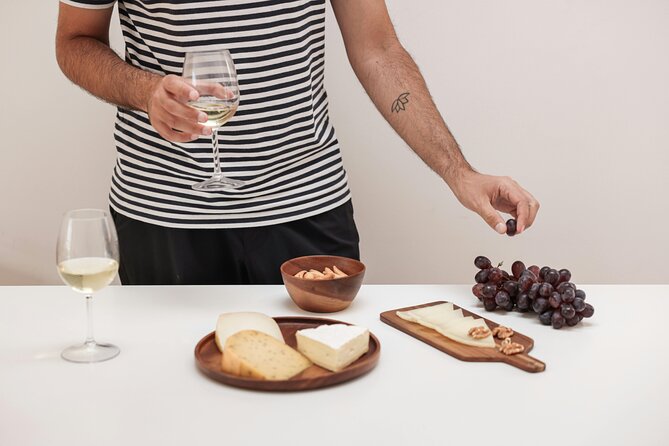
- Wine & cheese tasting happens with the guide’s story thread, not as an add-on
- Montmartre landmarks in tight sequence: Moulin Rouge, Café des Deux Moulins, Wall of Love, Bateau-Lavoir
- Place du Tertre artist square gives you a real feel for the neighborhood craft
- Self-guided Sacré-Cœur lets you choose how long to linger inside and at the views
Montmartre, but with food as the through-line
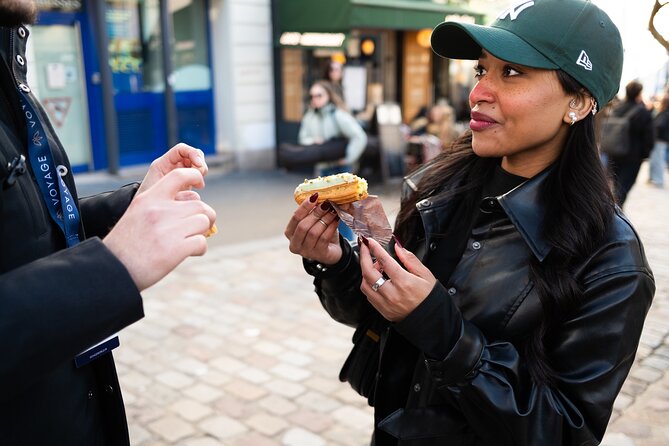
Montmartre is famous for postcards, but it can also turn into a “look, snap, move” kind of day. What I like about this experience is that the wine-and-cheese tasting gives the walk a center. Instead of bouncing between random sights, you follow a route where each stop helps explain the area’s creative pull—how entertainment, art, and street life shaped what you see today.
You also get a proper Montmartre rhythm: quick landmark stops, short pauses to take things in, and then a steady uphill finish. It’s structured enough that you won’t feel lost, but not so rigid that you can’t slow down when something catches your eye.
The tour runs in English and keeps a tight time frame (about 2 hours), so it works well as a “core experience” early in your day. And since many stops are free to enter or view from the street, you’re really paying for the guide-led storytelling and the tasting portion.
You can also read our reviews of more tours and experiences in Paris.


Why the 6-person cap changes everything
A lot of walking tours in Paris can feel like you’re part of a moving crowd. Here, the maximum of 6 travelers is a big deal. It means the guide can keep track of your group, answer questions without rushing, and adjust the pace when the street gets tight.
That small size also matters on Montmartre, where the sidewalks narrow and crowds pop up around popular landmarks. In practice, you spend less time herding and more time actually looking. If you care about food, it also helps that the tasting isn’t happening with a huge line of people waiting for their turn.
The other value point: you’re not just seeing places, you’re hearing why those places matter. When the guide can talk to a small group, the “why” sticks better than it does when everyone is just trying to keep up.
From Blanche to Moulin Rouge: the show-business entry point
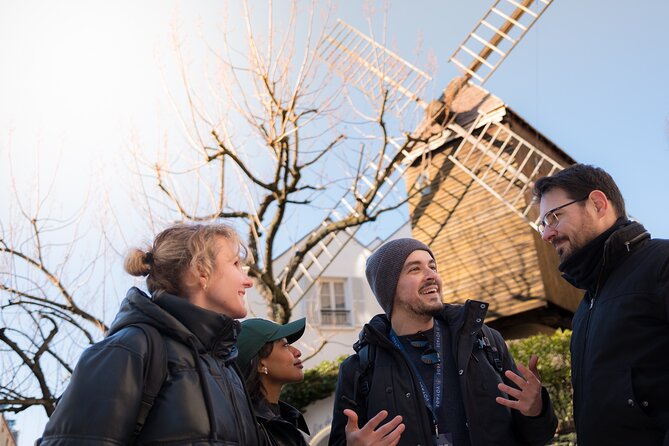
You start around Blanche in the 75018 area, and the walking begins right away. The first stop is the Moulin Rouge area—an iconic red windmill that’s basically a symbol of entertainment in Paris. You don’t spend long there (about 10 minutes), but that’s actually smart for most people. It gives you a quick reset point: the energy of Montmartre as a stage, not just a hill with views.
A nice thing about the early timing of this stop is that you’re still fresh. If you start too late in the day, you risk feeling tired before the best uphill leg. Here, you get the famous landmark out early, then the day turns more thoughtful as the stories get more specific.
One practical consideration: the area around Moulin Rouge can be busy depending on the time of day and season. You’ll want to keep your attention on the guide’s directions, because in crowds it’s easy to lose your group if you wander off for photos.
Café des Deux Moulins and the Wall of Love: pop culture meets public art
Next you head to Café des Deux Moulins, where you’ll hear anecdotes tied to films that found inspiration in Montmartre’s streets. This stop works because it turns a simple café location into a clue about how Montmartre became a setting people wanted to film and revisit.
You’ll get about 10 minutes here—enough to notice the vibe and the feel of the place, but not enough to turn it into a long café break. If you like sitting down and people-watching longer, plan to do that later on your own. In the context of this tour, the goal is to connect the visuals to the stories.
Then comes Le Mur des Je t’aime—the Wall of Love. This is one of those places that looks straightforward until you learn how universal the message is. It’s a 10-minute stop, but it’s the kind of stop that resets your mood. You shift from entertainment history to something more human and direct.
If you’re traveling with someone who likes photography, this is a good moment to capture images without needing to search hard for the right angle. The wall is designed for this, and the short stop keeps it fun instead of turning into a time sink.
Le Bateau-Lavoir and Place Dalida: where artists and music shaped the hill
From public art, you move toward creative spaces with Le Bateau-Lavoir. This stop is all about the artistic past—specifically, a space once hosted Picasso and other great artists. Even if you’re not a deep art-history person, this detail helps you understand why Montmartre became the place it did. It wasn’t just inspiration. People worked there.
You’ll get around 10 minutes, which again is a practical length. Montmartre sites aren’t arranged like museum halls. You’re moving through the neighborhood fabric, so the tour keeps each stop short and meaningful.
After that, you walk toward Place Dalida. This is where the tour adds a musical layer to the story. You’ll stroll in the footsteps of a legend tied to Montmartre’s sound, while also getting glimpses of Sacré-Cœur above the hill.
This is one of those “little moments” that makes the final ascent feel less random. You’re not just walking up because you have to. You’re climbing with anticipation, watching the basilica grow closer as the neighborhood shifts around you.





The wine-and-cheese tasting stop: the real pay-off
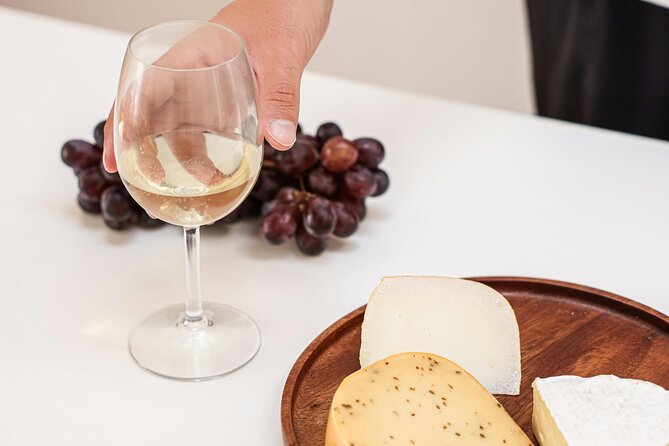
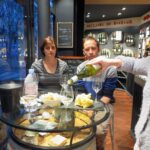
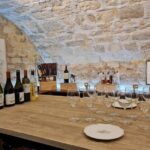
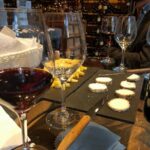
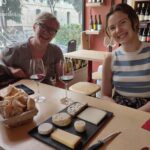
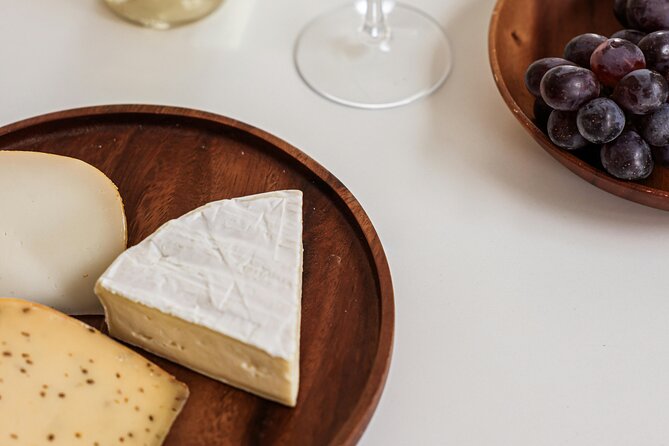
Half the reason to book a Wine & Cheese in Montmartre experience is what you do during the tasting—not just where you go before and after. In this tour, there’s a restaurant stop where your guide shares the background of the venue, described as a muse for novels and famous paintings. That context matters, because it frames your tasting as part of Montmartre’s creative ecosystem, not just a snack break.
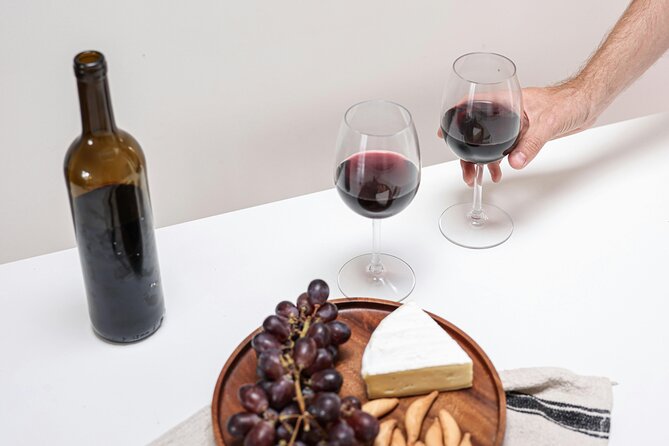
You should expect the tasting to include items that are not plant-based, so it isn’t suitable for vegan visitors. If you have food allergies or specific requests, the right move is to leave a note when you book so the operator can try to accommodate you.
Practical advice: Montmartre walking builds appetite fast. Even though the day is only around 2 hours, you’ll likely be hungry by the time you reach the tasting. Stay relaxed, pace your sips, and treat it as a moment to slow down before the final climb.
Also, check your comfort with dairy before you commit. The tour name is wine and cheese for a reason, and the tasting portion is central to the value of the experience.
Place du Tertre: the artist square you can actually watch
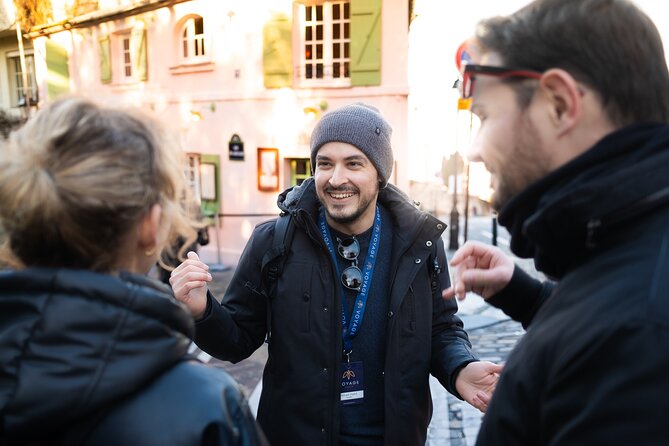
Next you reach Place du Tertre, a lively square known for artists working on-site. This stop is 10 minutes, but it’s a great use of time because you’re not just viewing art—you’re seeing process. Watching someone brushstroke a canvas right there gives you a better feel for why Montmartre’s art scene never fully went away.
This is also a practical stop in terms of navigation. By the time you arrive, you can orient yourself for the final move toward Sacré-Cœur. If you’re the type who likes to buy a postcard or a small art piece, you’ll have a good sense of what’s on offer—just don’t expect this tour to linger. The format is designed to keep moving and keep the day within the 2-hour window.
One consideration: popular squares can be crowded, especially seasonally. If you want space for photos, aim for a calm posture and accept that you’ll share the square with other people making their own Montmartre memories.
Sacré-Cœur on your schedule: self-guided finish with big views
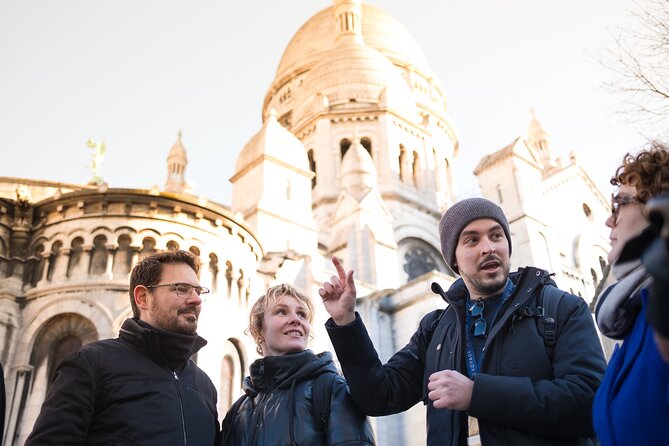
The tour concludes at the top of Montmartre, right by Sacré-Cœur Basilica, at 35 Rue du Chevalier de la Barre. Here, you transition from guided walking to a self-guided visit. If you want to step inside, you can. If you’d rather linger outside for the panorama, you can do that too.
This ending is a smart design choice. Sacré-Cœur is one of those places where people want different things: some want the interior, some want the views, and some want both but in their own time. By keeping this part flexible, the tour helps you build your own last chapter.
If it’s a sunny day, the views from the area can feel almost unfair in the best way. If it’s raining, you may want to prioritize the quickest walk inside and then move through the plaza carefully. Either way, plan for the fact that you’ve earned this finish with hills and steps.
How the $147.74 price pencils out for what you actually get
At $147.74 per person for about 2 hours, this isn’t a cheap “just walk around” option. But you’re not paying for basic walking directions. You’re paying for three things that add real value:
First, the 6-person cap. That helps keep the experience smoother and more interactive. Second, the guide-led story thread across multiple landmarks, from Moulin Rouge to the Wall of Love to Le Bateau-Lavoir. Third, the wine-and-cheese tasting, which is the main event and the part you’d likely spend extra time and money arranging on your own.
If you were planning to do Montmartre solo, you’d still need to figure out the route, decide where to stop, and then find a tasting experience that matches your preferences and timing. Here, the tasting is built into the day and tied to the neighborhood’s creative lore.
So I see the price as “you’re buying convenience plus context plus a tasting.” If that’s your travel style, the cost makes sense. If you’re mostly after empty time and shopping, it might be overkill.
Who this tour suits best (and who may want to rethink)
This experience is best for people who want Montmartre as a story you can walk through, plus a real food-and-drink moment. It also suits you if you like guided pacing and short stops with enough time to look, not just sprint from place to place.
You should think twice if you’re sensitive to walking difficulty. The route follows winding streets with lots of steps and small hills, and it’s recommended for people with moderate physical fitness. You’ll also want to dress for weather because the tour runs rain or shine.
It’s a good fit for couples, friends, or solo travelers who don’t want to travel with a big group and prefer a clear plan. And if you want English narration and a mobile ticket, this is set up for that.
Finally, one more fit check: the tasting includes non-plant-based items, so it won’t work for vegans.
Should you book Wine & Cheese in Montmartre?
I’d book this if you want Montmartre with a guide, not just a map. The 6-person limit and the guide’s energetic storytelling—there’s even mention of an especially lively guide named Emma—are exactly the kind of details that turn a walk into a memory.
I’d also book it if wine-and-cheese is your travel language. The tasting is not an afterthought here; it’s the midpoint that gives meaning to the route.
Skip it if you hate stairs, if you’re vegan, or if you prefer to wander without structure. Montmartre is beautiful, but this route is designed to move. If you want to sit for long stretches and take everything slowly, you’ll likely feel a bit boxed in.
FAQ
How long is the wine and cheese tour in Montmartre?
The tour lasts about 2 hours.
What group size is the tour limited to?
The experience is capped at a maximum of 6 people.
Is the tour offered in English?
Yes, the tour is offered in English.
Does the tour run in bad weather?
It runs in rain or shine. If it’s canceled due to poor weather, you’ll be offered a different date or a full refund.
Is the food tasting vegan-friendly?
No. The food tastings include items that are not plant-based, so it is unsuitable for vegan guests.
Is the walking route difficult?
It follows Montmartre’s winding route with lots of steps and occasional small hills. It’s recommended for travelers with moderate physical fitness.
Where does the tour start and end?
It starts at Blanche (75018 Paris) and ends at the top of Montmartre in front of Sacré-Cœur Basilica at 35 Rue du Chevalier de la Barre, 75018 Paris.